How to Practise Shiv Chintan in Daily Life
By SiddhiStar | Narwar Dham Parampara
21 July 2026 • 6 min read
In today's fast-paced world, finding a few moments of peace can feel difficult. Our minds are constantly occupied with work, responsibilities, relationships and countless distractions. Even during prayer, thoughts continue to wander from one concern to another.
Yet, according to Param Pujya Mahesh Prakash Sharma Ji, one of the greatest gifts we can offer Lord Shiva is not merely a ritual, but our attention. This is the essence of Shiv Chintan.
Many devotees assume that Shiv Chintan means sitting in deep meditation for hours. Guruji explains that its true meaning is much simpler and far more practical. It is the continuous remembrance of Lord Shiva throughout the day, allowing His qualities to influence our thoughts, decisions and actions. When remembrance becomes natural, Shiva Bhakti gradually moves beyond the prayer room and becomes a way of life.
Guruji teaches that the human mind is never truly empty. It is always thinking about something. If the mind remains occupied only with fear, desire, comparison and worry, these thoughts slowly shape our personality. If the same mind repeatedly remembers Lord Shiva, reflects upon His qualities and seeks His guidance, it gradually becomes peaceful, balanced and fearless.
This is the real purpose of Shiv Chintan. It is not escaping the world. It is learning to live in the world while remaining inwardly connected to Lord Shiva.
What Does Shiv Chintan Really Mean?
The word Chintan means contemplation or thoughtful reflection. It is different from simply remembering a name. During Shiv Chintan, we consciously reflect on who Lord Shiva is and what He represents.
Why is Mahadev always calm even in the midst of destruction? Why does He wear ashes instead of ornaments? Why does He choose Mount Kailash instead of a palace? Why is He called Bholenath?
Each question becomes an opportunity to understand His teachings more deeply. As these reflections continue, devotion becomes rooted in understanding rather than habit.
Why Does the Mind Wander During Prayer?
Almost every devotee experiences this. The moment we sit for Lord Shiva Puja, thoughts about work, family, finances or unfinished tasks begin to arise. Guruji says we should not become discouraged by this. The wandering mind is part of human nature.
The practice of Shiv Chintan is gently bringing the mind back to Lord Shiva every time it drifts away. Just as a loving parent patiently guides a child, a devotee patiently guides the mind. Without frustration. Without guilt. Without giving up. Over time, this repeated effort strengthens concentration naturally.
Remembering the Qualities of Lord Shiva
One of the easiest ways to practise Shiv Chintan is to reflect upon one divine quality every day. Think about Shiva's compassion. His patience. His fearlessness. His simplicity. His detachment. His unconditional acceptance of all beings.
Ask yourself a simple question. "How can I express this quality today?" Perhaps through forgiveness. Perhaps through honesty. Perhaps by remaining calm during a difficult conversation. When contemplation begins to influence conduct, Shiv Chintan has fulfilled its purpose.
Shiv Chintan Is Possible Anywhere
Many people believe they need a temple or meditation hall to remember Lord Shiva. Guruji teaches otherwise.
You can practise Shiv Chintan while travelling to work. While preparing food. While walking. While waiting for a meeting to begin. While sitting quietly before sleeping.
A few sincere moments of remembrance are often more valuable than long hours of distracted worship. Lord Shiva does not ask for perfect conditions. He asks for a sincere heart.
Simple Daily Practices for Shiv Chintan
Developing the habit of remembrance does not require major changes to your routine. Begin with a few simple practices.
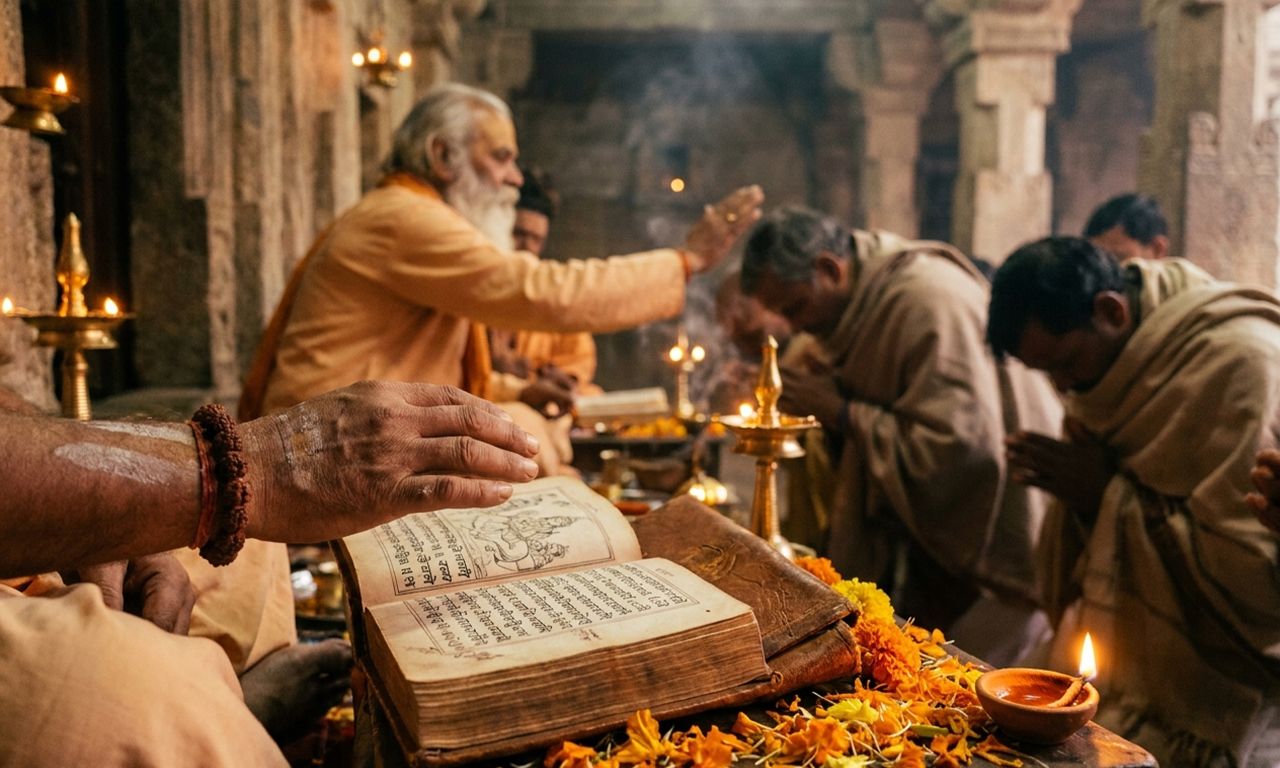
Start your day by chanting Om Namah Shivaya eleven times with complete attention. Spend five minutes reflecting on one teaching of Lord Shiva. Read a small passage from a sacred text before sleeping. Listen to authentic Shiv Katha while travelling. Pause for a few seconds before every important decision and mentally remember Mahadev.
These small moments gradually become a continuous thread connecting the entire day with Lord Shiva.
The Difference Between Thinking About Shiva and Living With Shiva
Many devotees remember Lord Shiva only during festivals like Sawan or Mahashivratri. Guruji encourages us to take one step further. Instead of remembering Lord Shiva only during worship, invite Him into every aspect of daily life.
Before speaking, ask whether your words reflect His compassion. Before reacting, ask whether your response reflects His calmness. Before making a decision, ask whether it aligns with Dharma.
This is the transformation that Shiv Chintan brings. Lord Shiva no longer remains only in the temple. He becomes the silent guide behind every thought and action.
The Narwar Dham Tradition
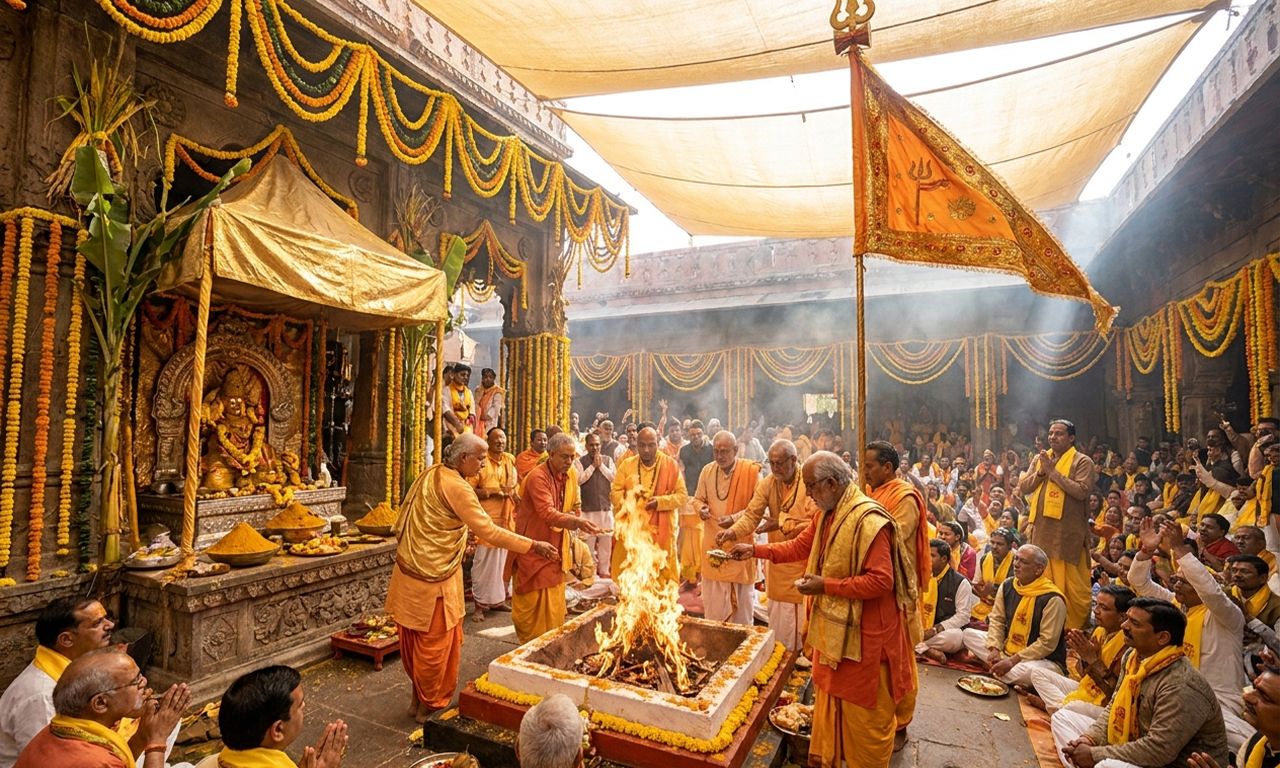
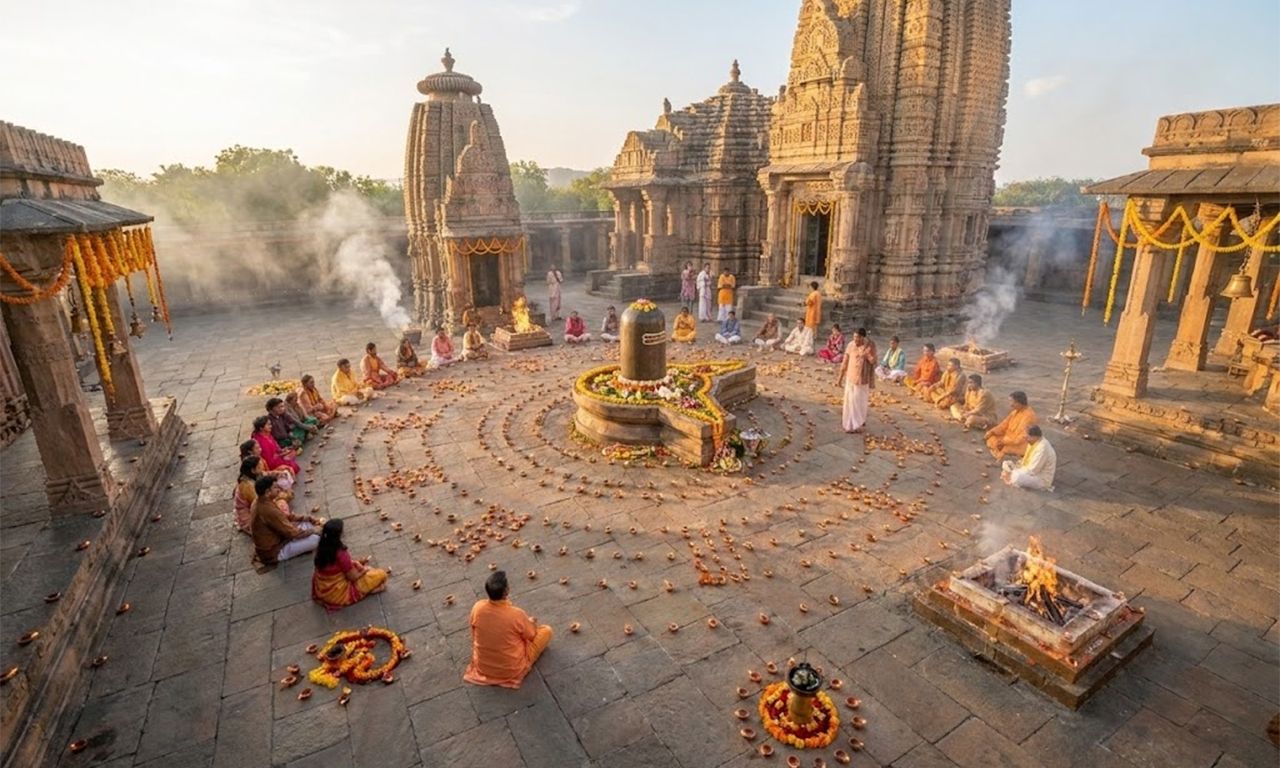
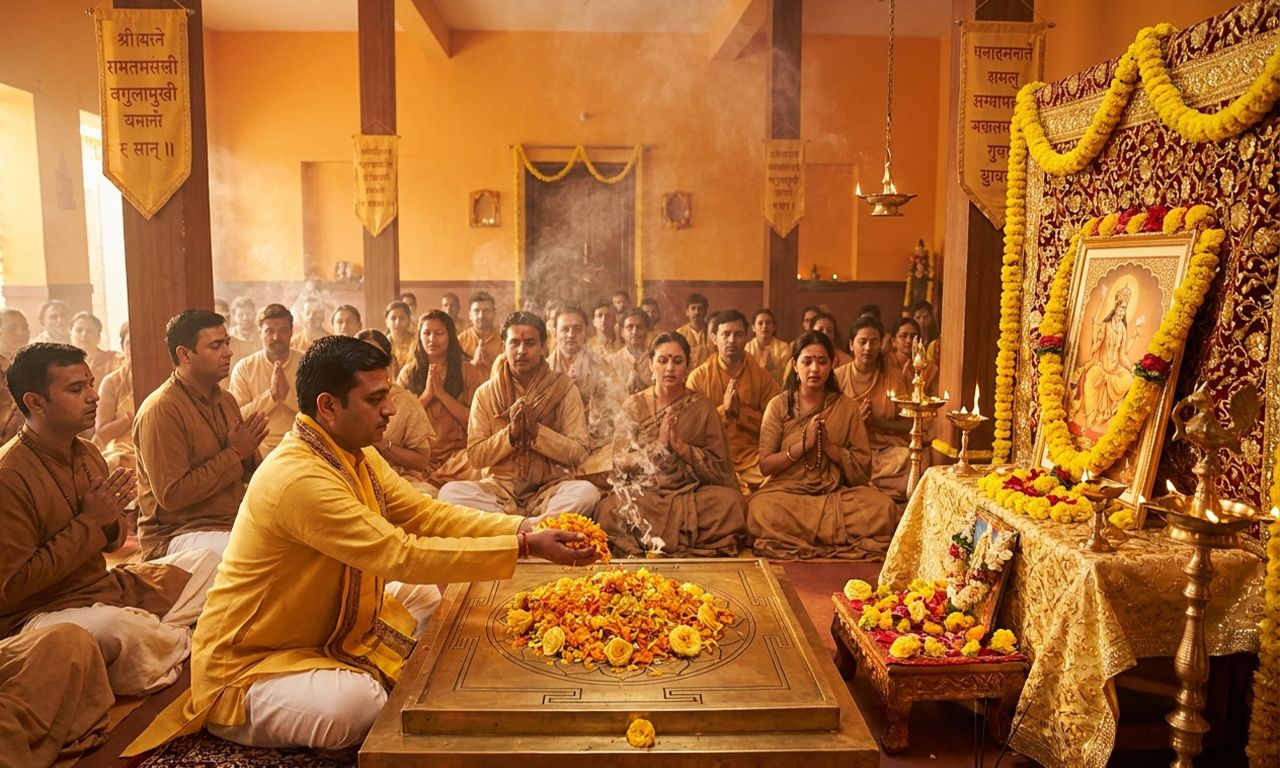
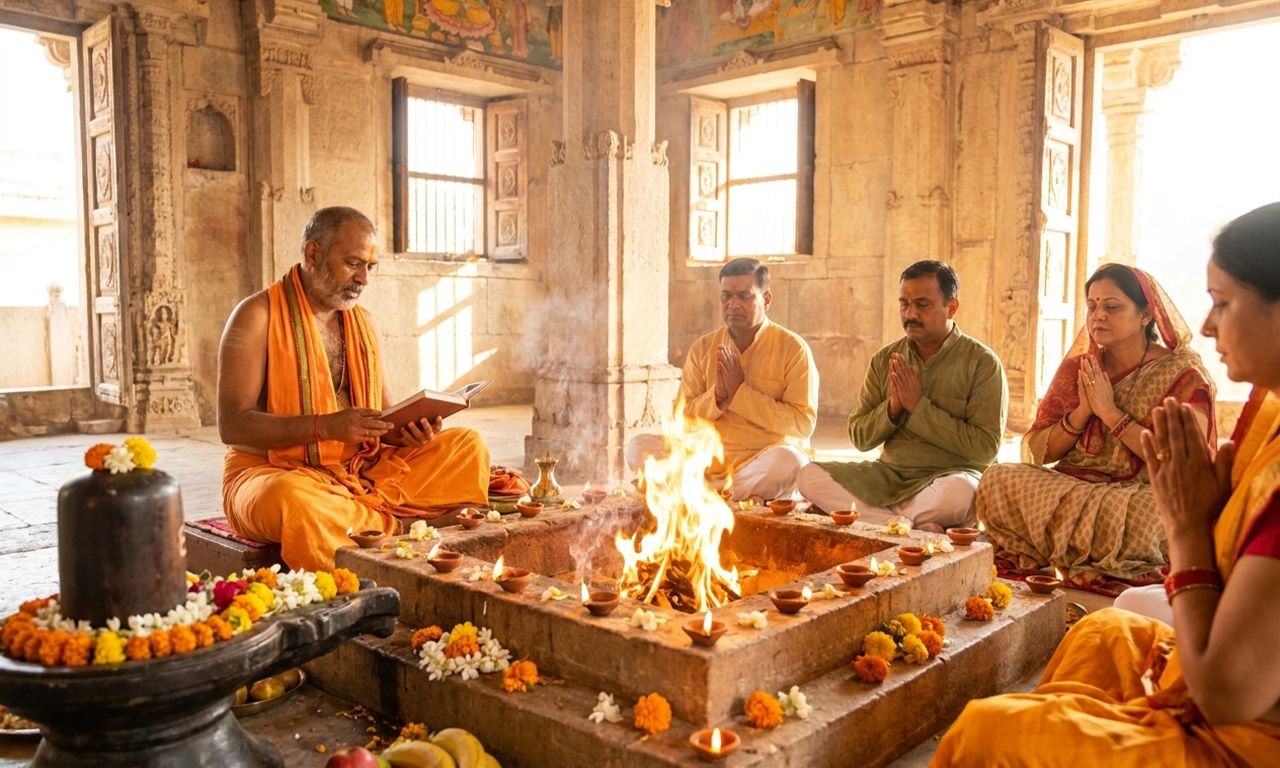
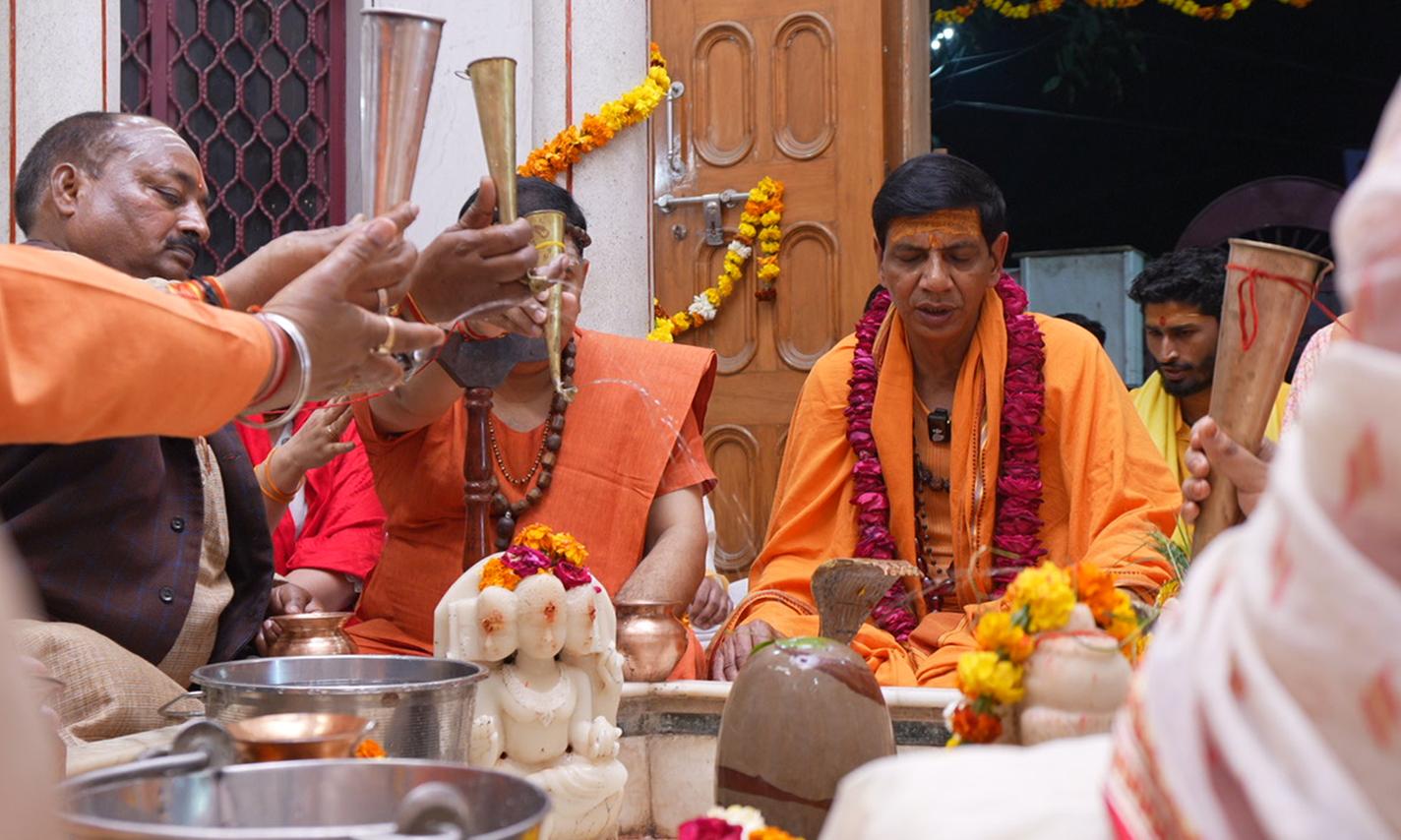
Within the Narwar Dham Guru Parampara, contemplation has always accompanied worship. Every Puja, every Rudrabhishek and every mantra is performed with conscious awareness rather than mechanical repetition.
Guruji teaches that rituals become truly meaningful only when the mind participates fully. This tradition encourages devotees to combine worship with reflection, allowing every ritual to become an opportunity for inner transformation.
Frequently Asked Questions
What is Shiv Chintan?
Shiv Chintan is the continuous contemplation and remembrance of Lord Shiva, allowing His teachings and qualities to guide your thoughts and actions.
Is Shiv Chintan the same as meditation?
Not exactly. Meditation is one method. Shiv Chintan includes meditation, reflection, remembrance and consciously living according to Lord Shiva's teachings throughout the day.
How long should I practise Shiv Chintan?
Begin with five to ten minutes daily. Consistency is far more important than duration.
Can beginners practise Shiv Chintan?
Yes. Anyone can begin by chanting Om Namah Shivaya, reflecting on one quality of Lord Shiva and remembering Him throughout the day.
Does Shiv Chintan replace Puja?
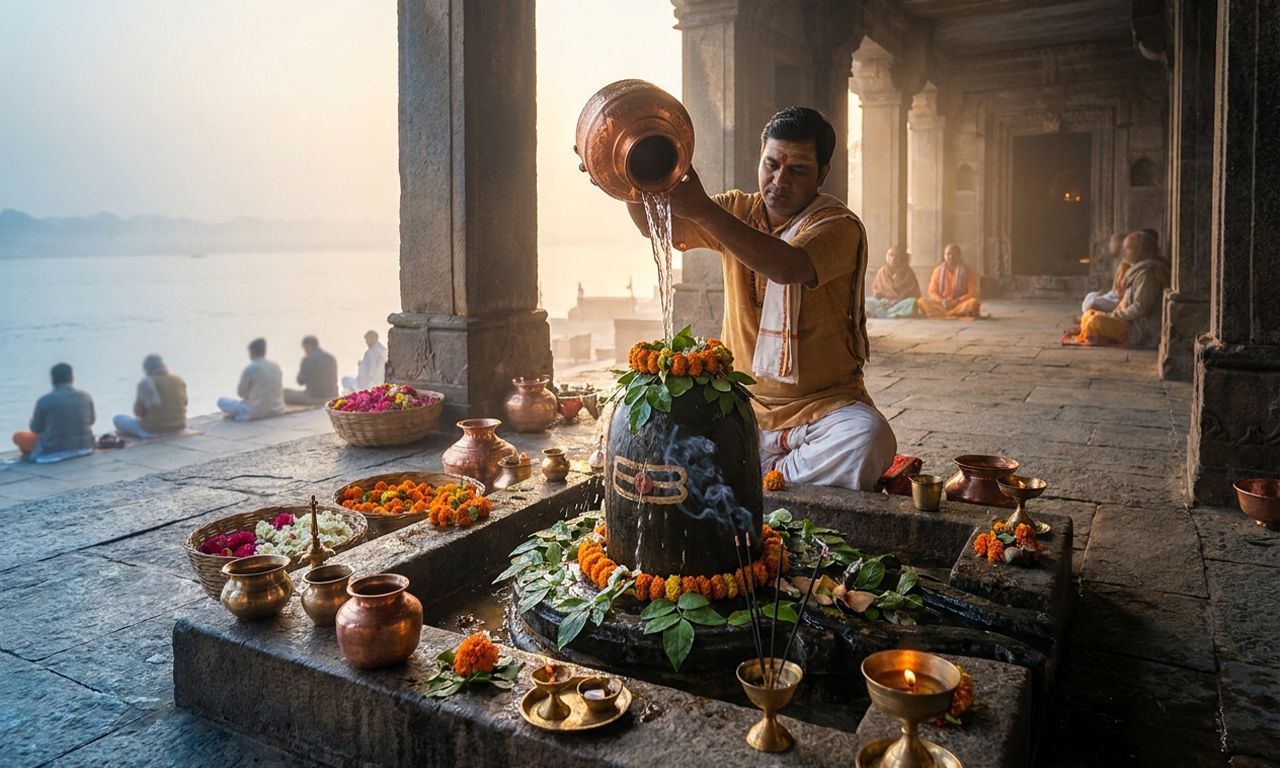
No. Both complement each other. Lord Shiva Puja expresses devotion externally, while Shiv Chintan deepens that devotion internally.
From Faith to Sadhana
The mind becomes peaceful when it repeatedly returns to Lord Shiva. The next step is to transform that remembrance into sacred worship. Participating in a Rudrabhishek allows your prayers, intentions and devotion to be offered through authentic Vedic rituals performed by learned Acharyas.
This Sawan, become a part of the Sawan Maha Rudrabhishek at the 120-year-old Narwar Dham Guru Parampara. The ritual is performed in your name and gotra, invoking Lord Shiva's blessings for peace, wisdom, health and spiritual progress.
Offer your Sankalp today and let every thought become an offering to Mahadev.