Baglamukhi Jayanti Mahapuja at Narwar Dham: What Happened, What Was Said, What It Meant
By SiddhiStar | Narwar Dham Parampara
15 May 2026 • 12 min read
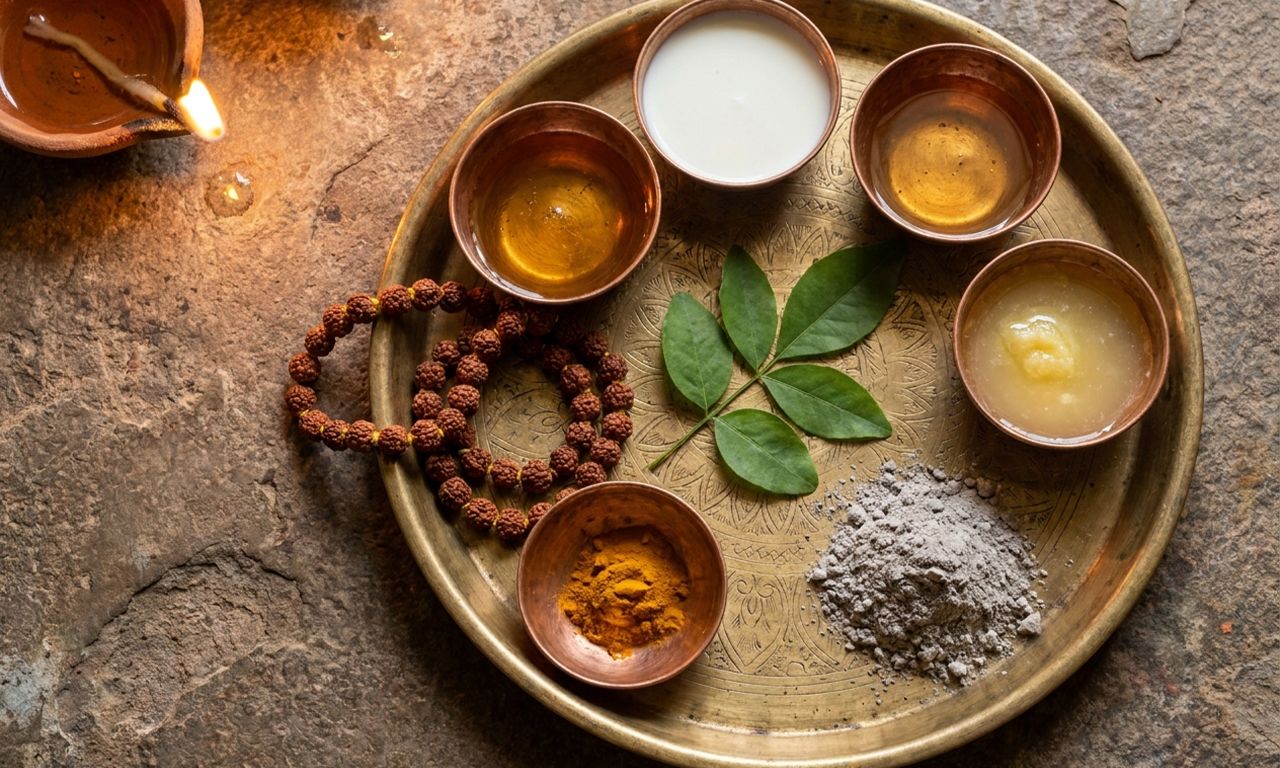
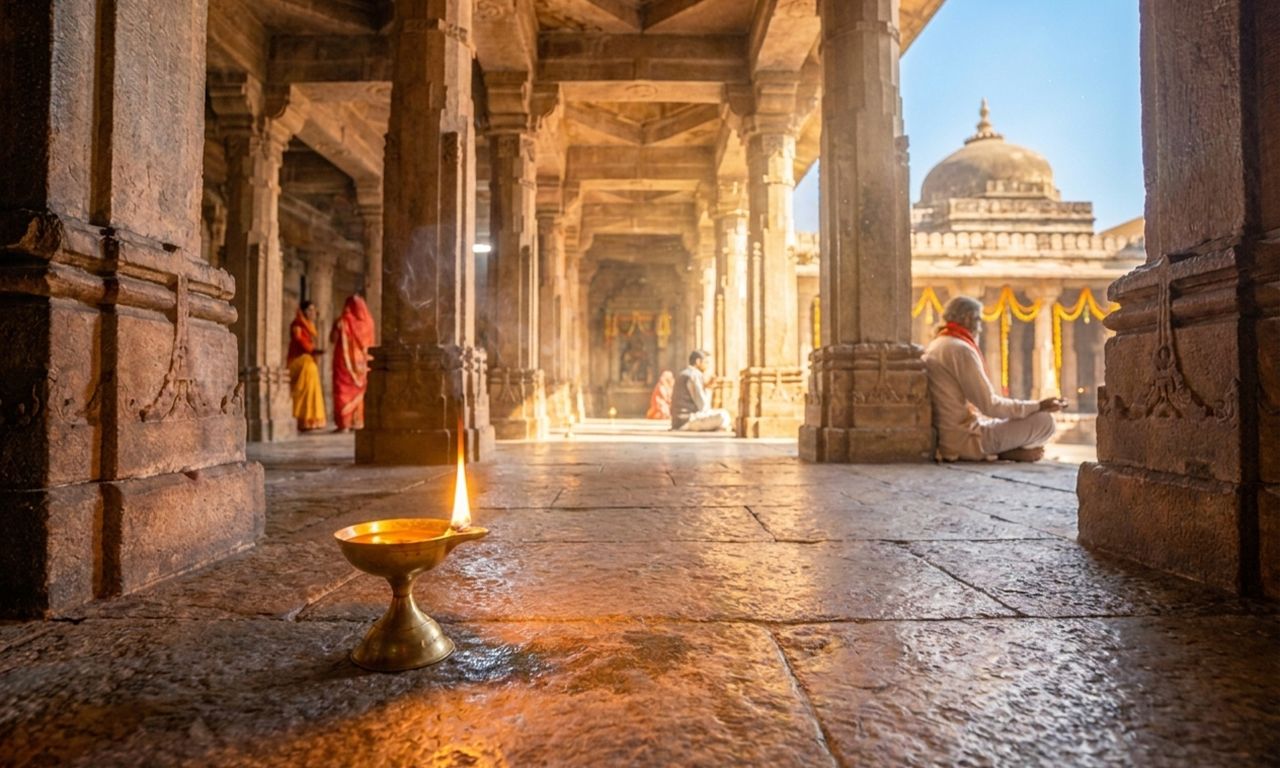
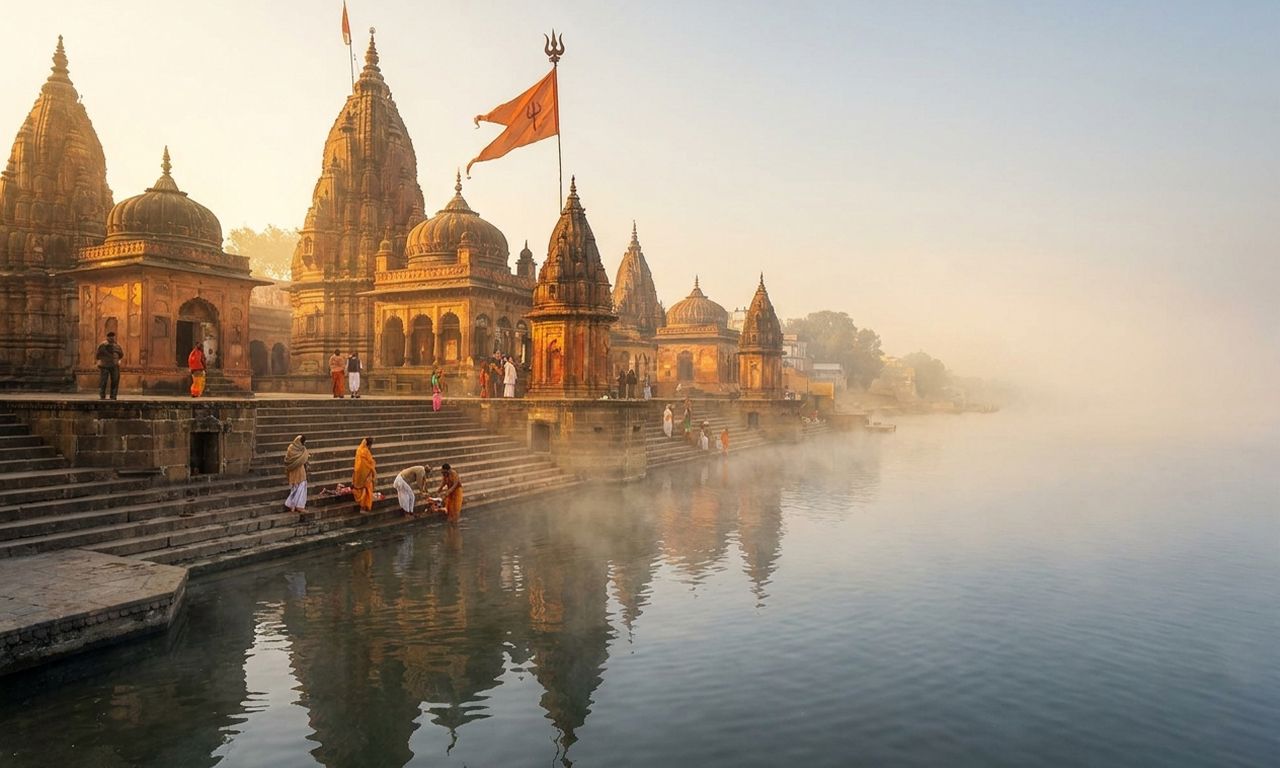
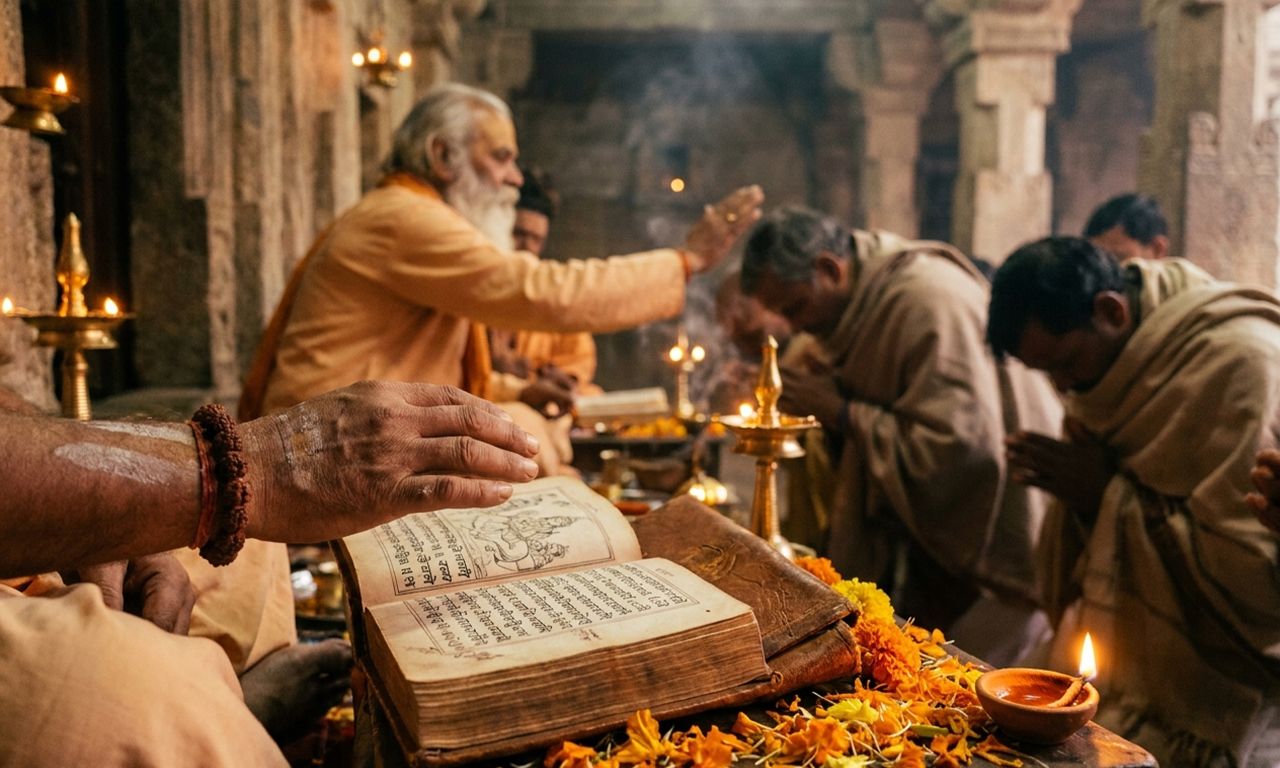
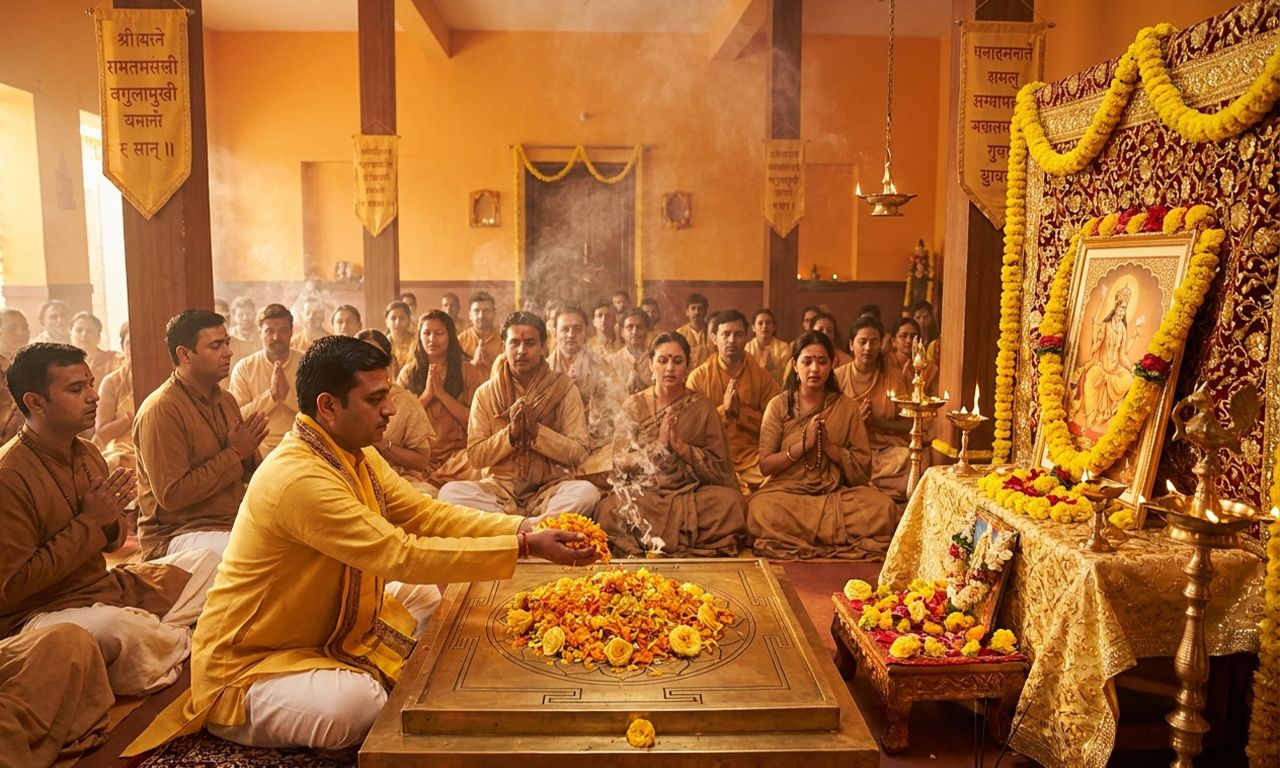
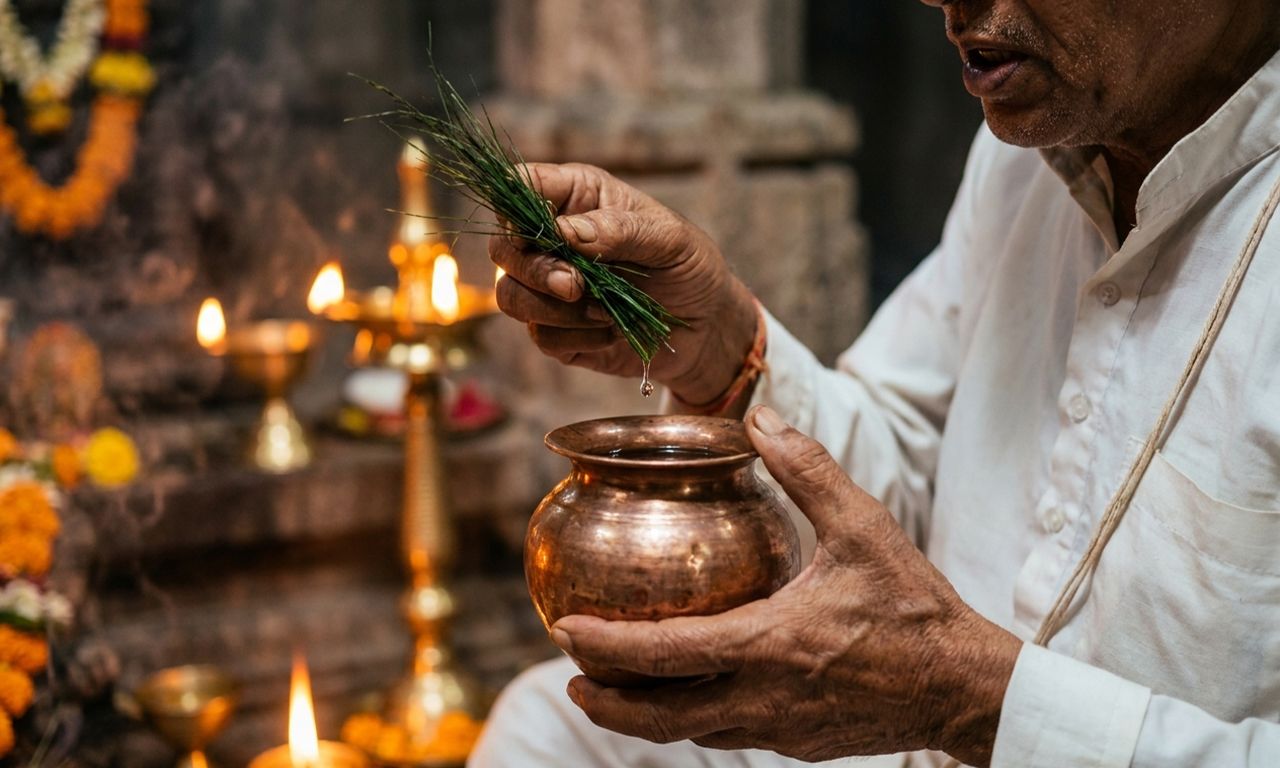
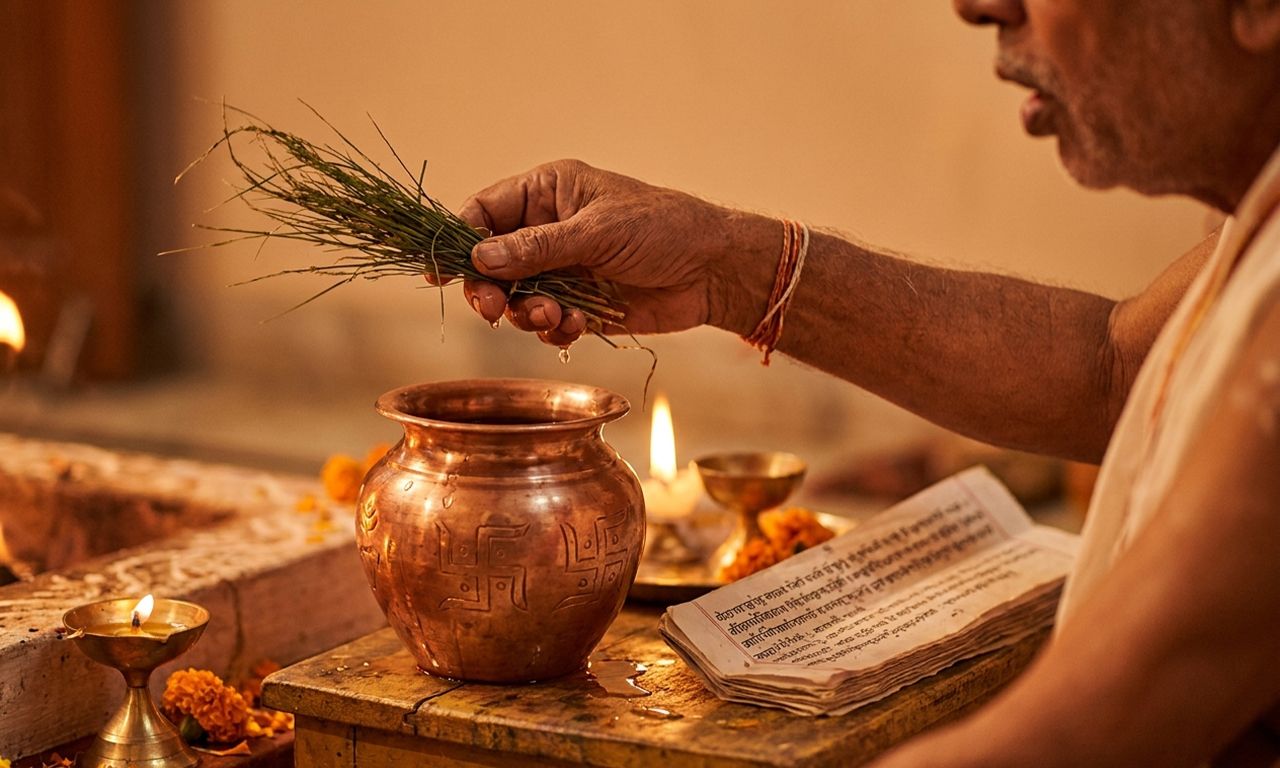
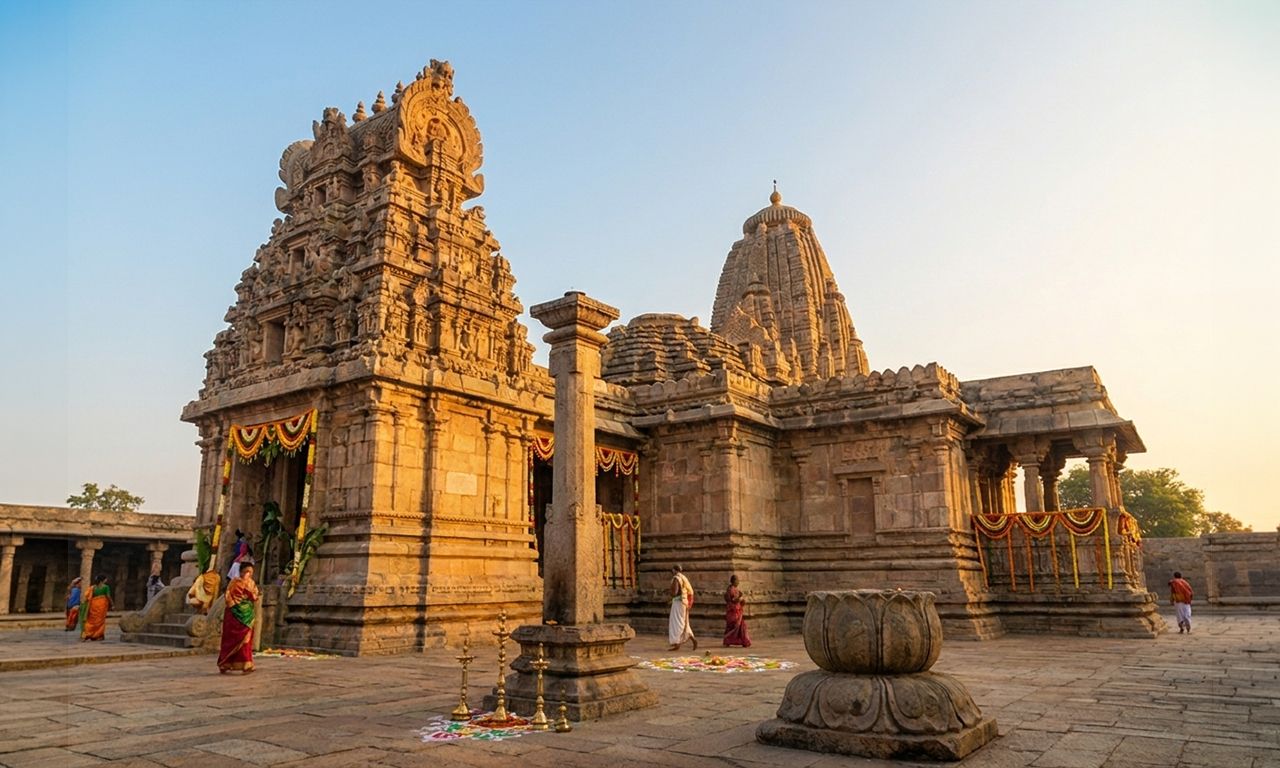
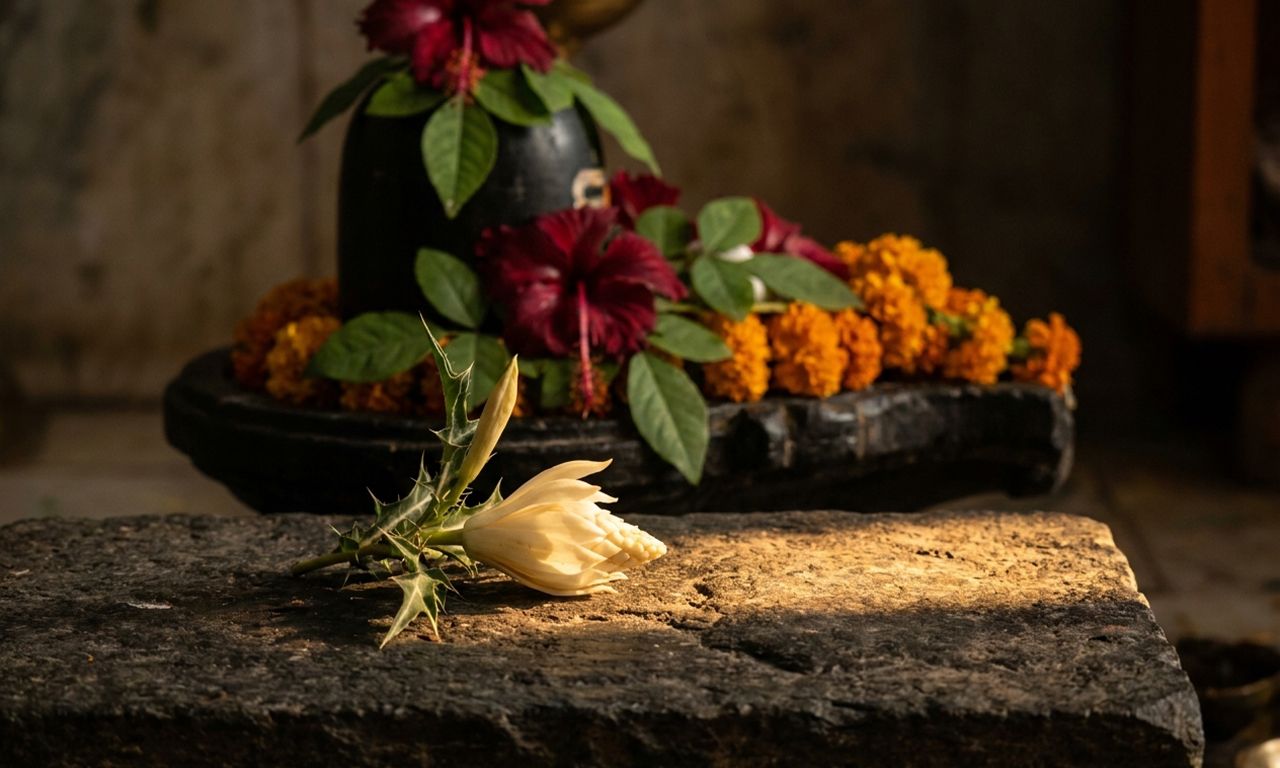
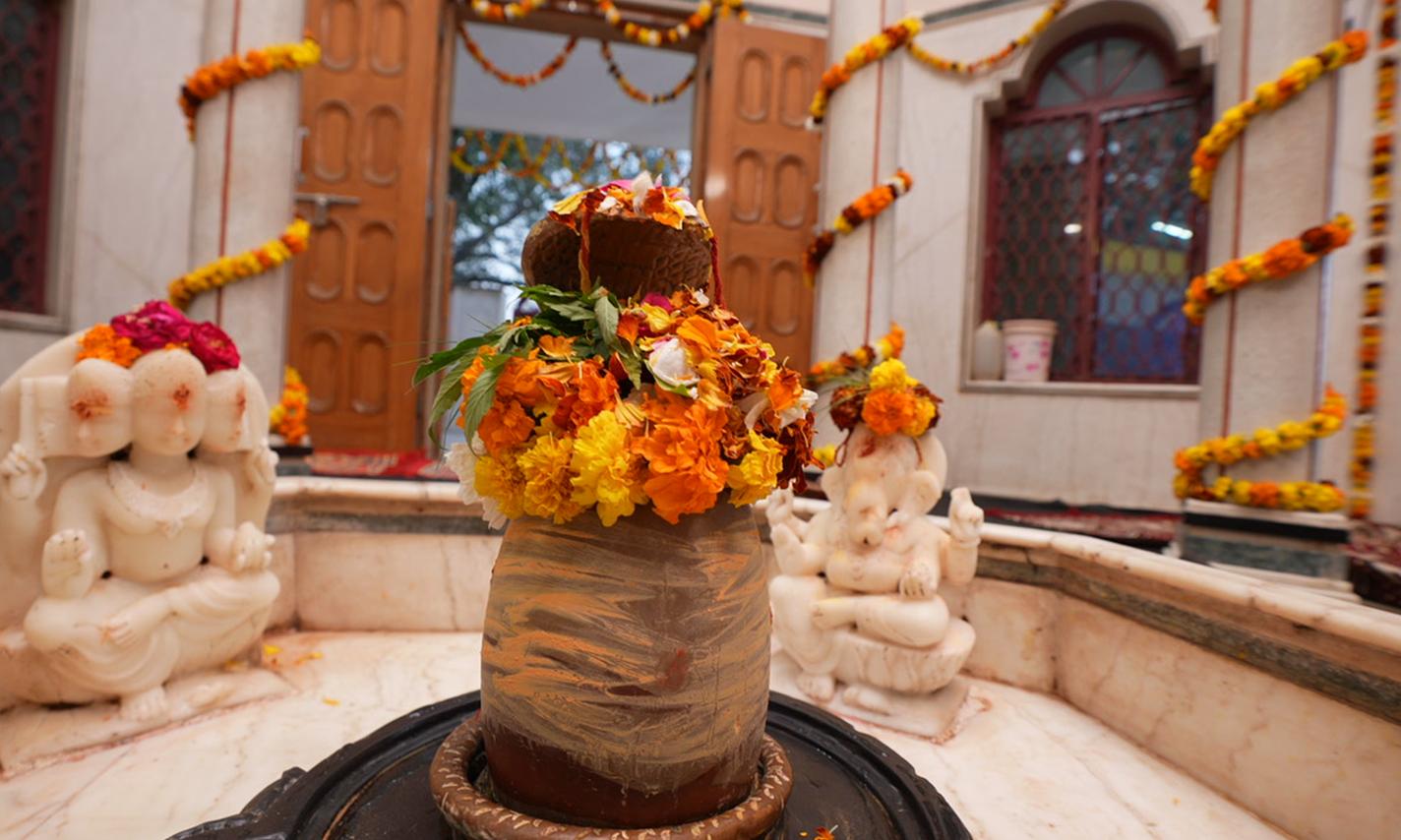
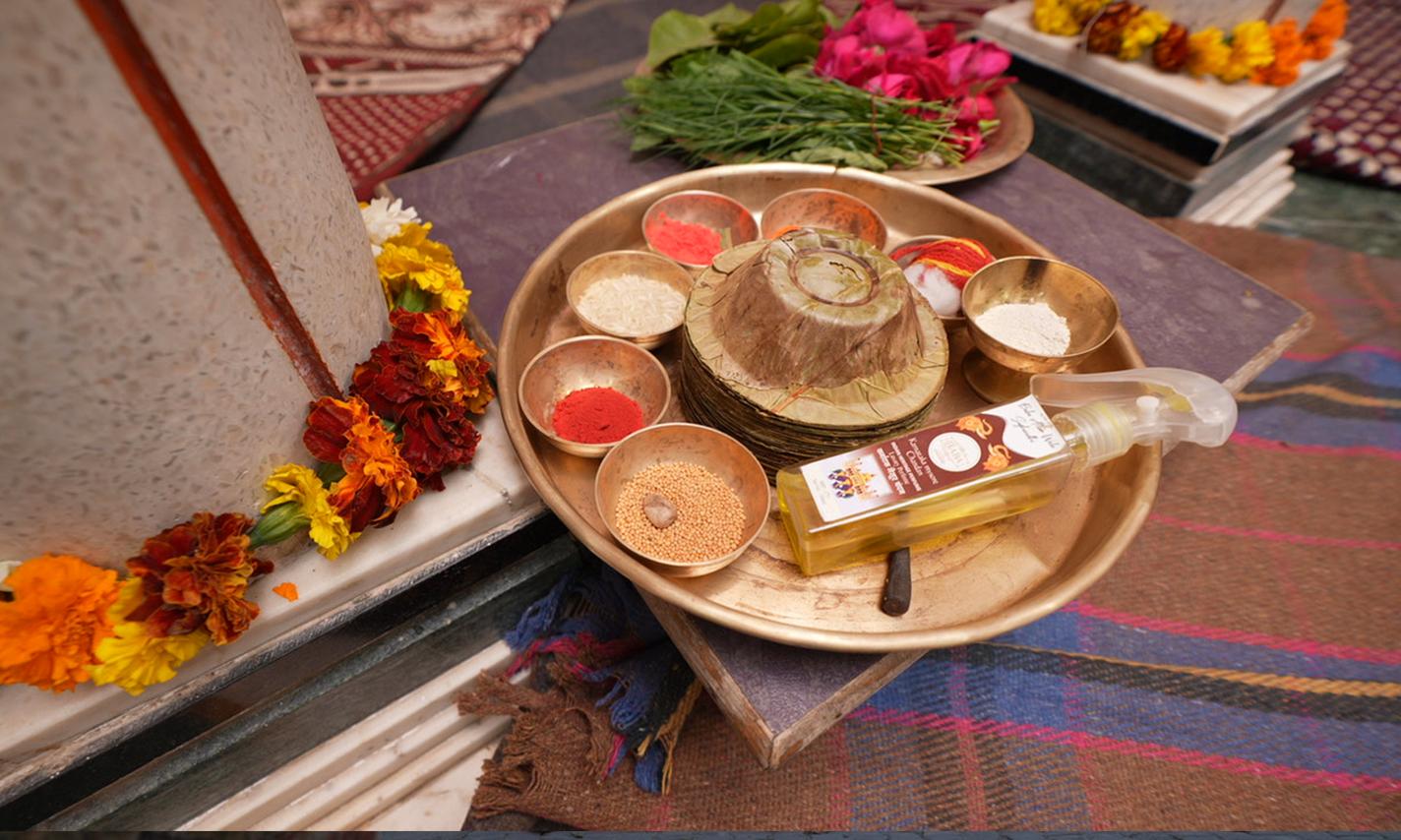
The morning begins before it begins. There is a quality of preparation in the air at Narwar Dham in the hours before the Baglamukhi Jayanti Mahapuja opens. The yellow cloth is laid. The Baglamukhi yantra is placed at the centre of the consecrated space. The samagri is arranged - turmeric, yellow flowers, mustard seeds, ghee, til, the herbs specific to the goddess.
The SiddhiStar participants are logging in from across India and abroad. From Delhi. From Mumbai. From Bengaluru. A family in Singapore. A devotee in London. All of them have registered. All of their names will be spoken in the Sankalp.
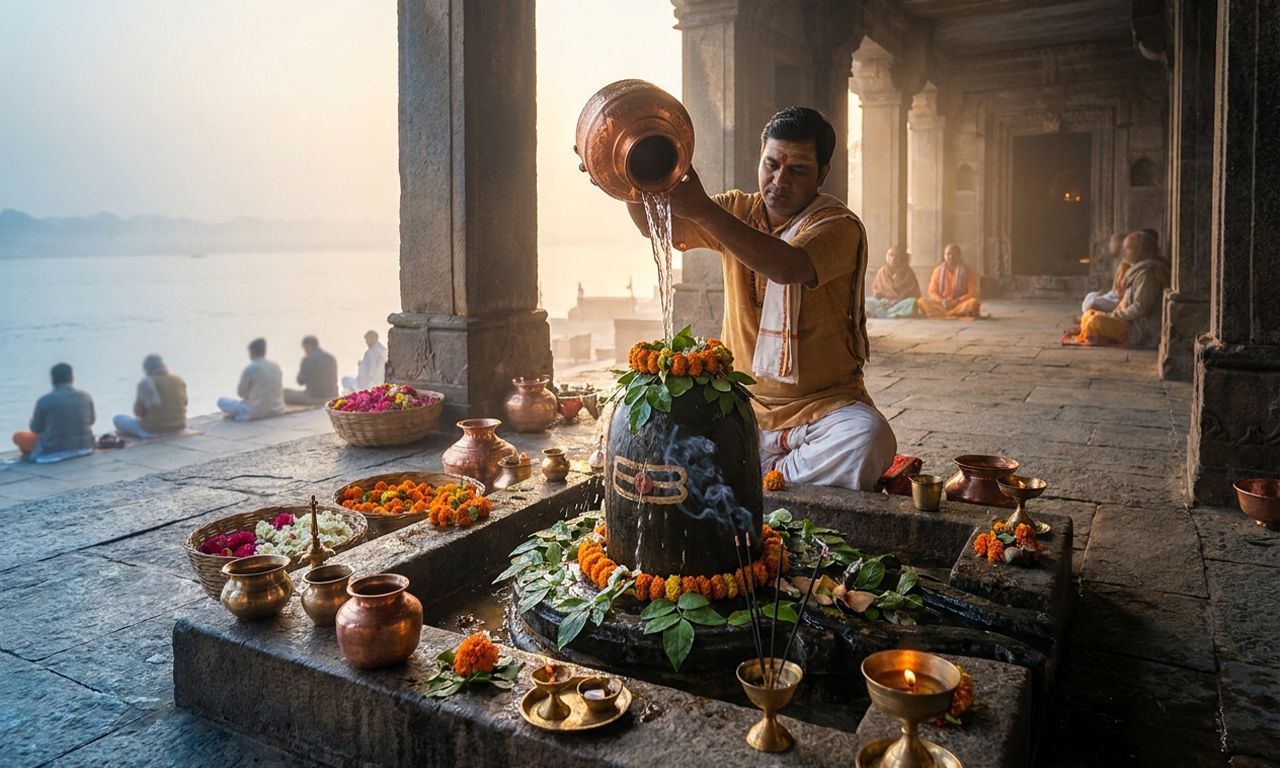
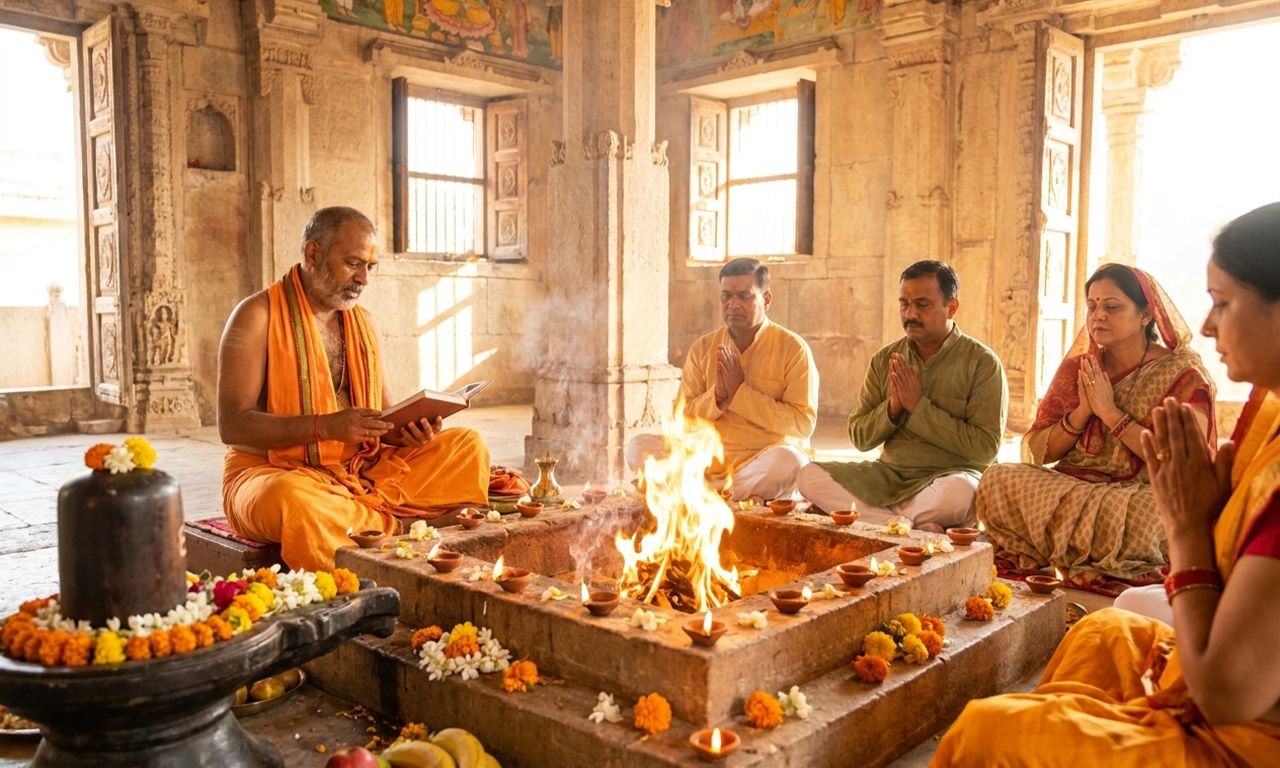
This is what a complete baglamukhi puja looks like when conducted in the Narwar parampara - every stage honoured, every mantra in full, the maa baglamukhi ceremony reaching its true form.
Pavitrikaran and Achaman - The Opening
The space is purified. The body is purified. The pandit speaks the opening mantras of the baglamukhi mantra sequence. The room settles.
Sankalp - Each Name Spoken
This is the most personal moment of any SiddhiStar ceremony. The pandit speaks each registered family's name, gotra, city, and intention. Saurabh - Bhardwaj gotra - Gurgaon. Asha - Mumbai. Vikram - Singapore. Each one held by the baglamukhi mata ceremony from the moment it is spoken.
Mansik Pujan of Lord Shiva
Every Baglamukhi puja begins with mental worship of Shiva - Baglamukhi's Bhairava form. Without invoking Shiva first, the baglamukhi mantra does not have its full settling. (See Article 21.)
Gauri Ganesh and Yantra Sthapana
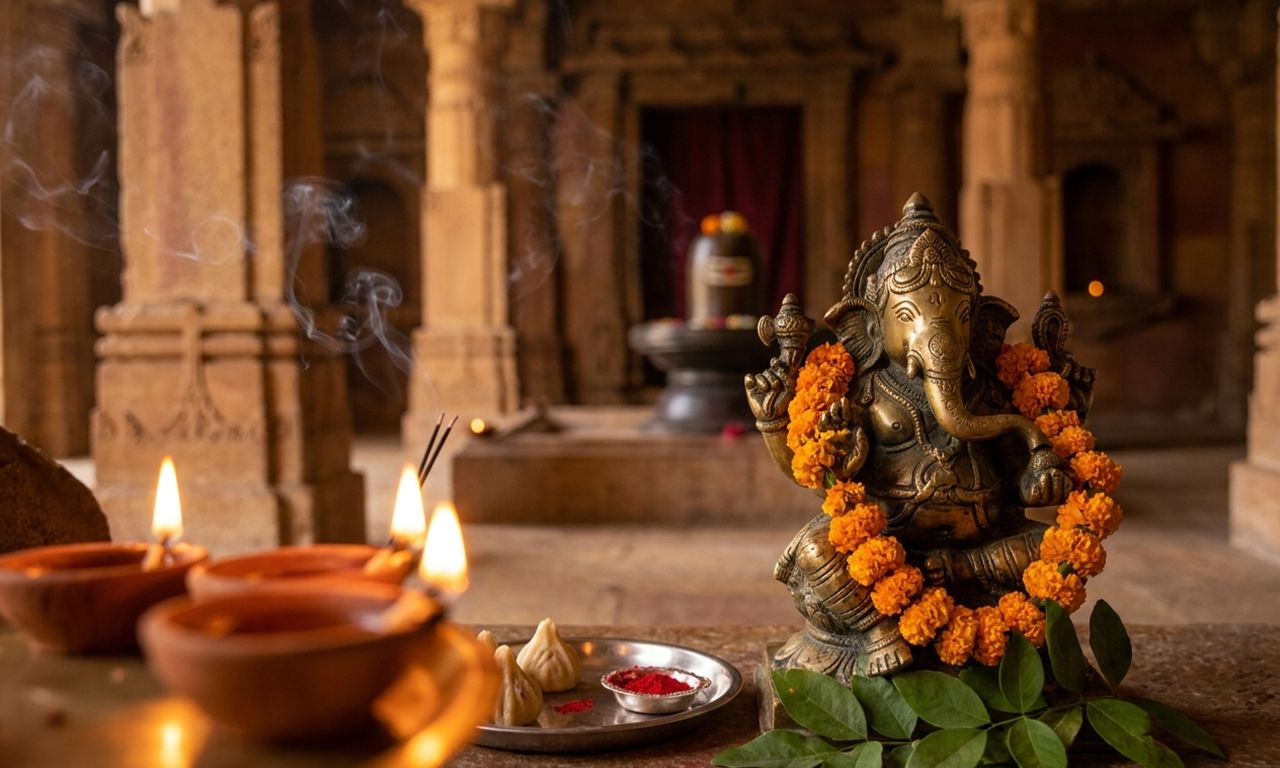
Ganesha receives offerings. The Kalash is established. The baglamukhi yantra is placed and consecrated. Yellow cloth beneath. Yellow flowers around.
The 16 Upchar Offerings
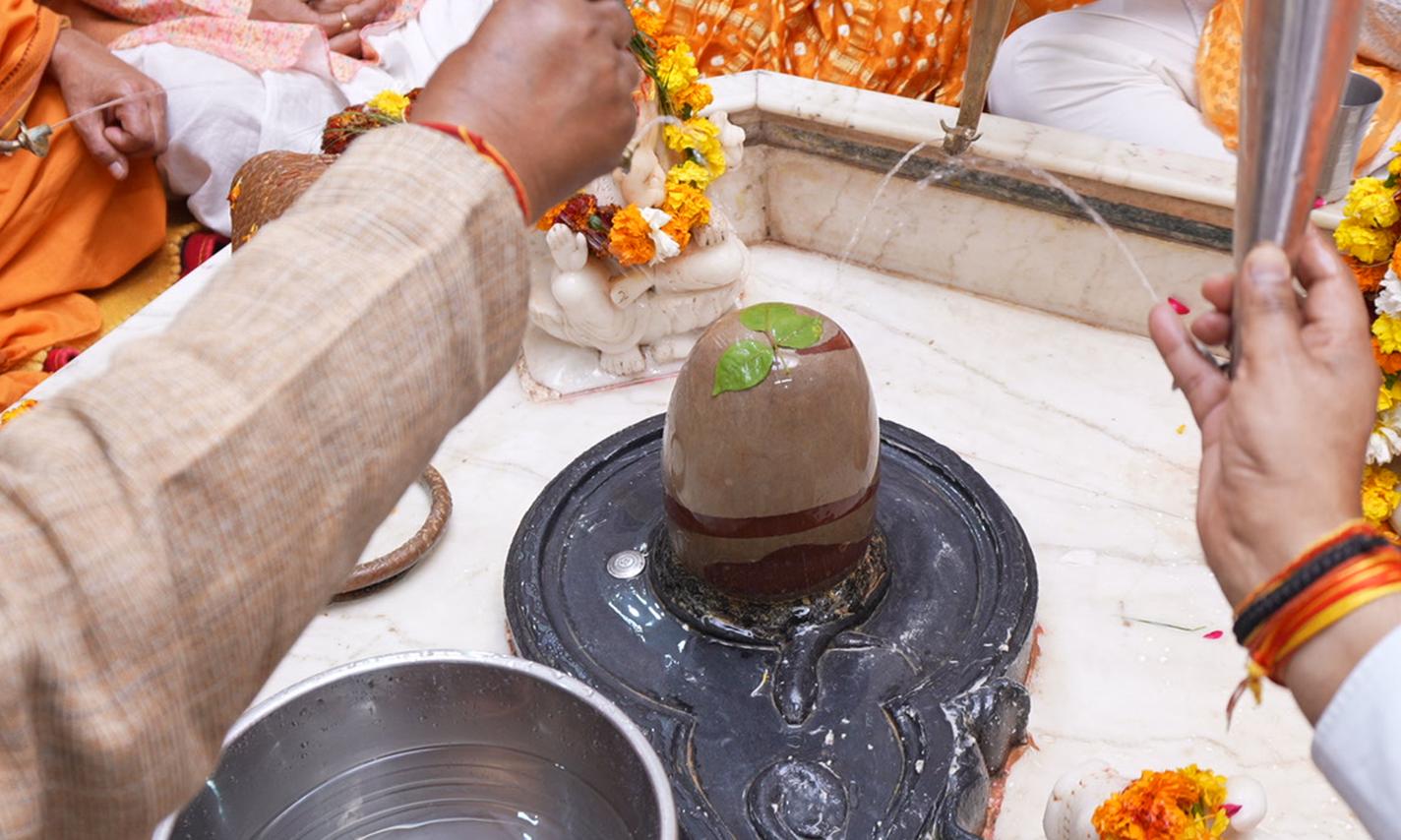
The full Upchar sequence is performed. Each material offered with its mantra. (See Article 2.)
Mool Mantra Jaap
The baglamukhi mantra is recited. 1008 times. Each repetition with full attention.
108 Names Chanting
The baglamukhi mata Ashtottara Shatanamavali is chanted in full. (See Articles 13 and 15.)
The Baglamukhi Havan - The Peak
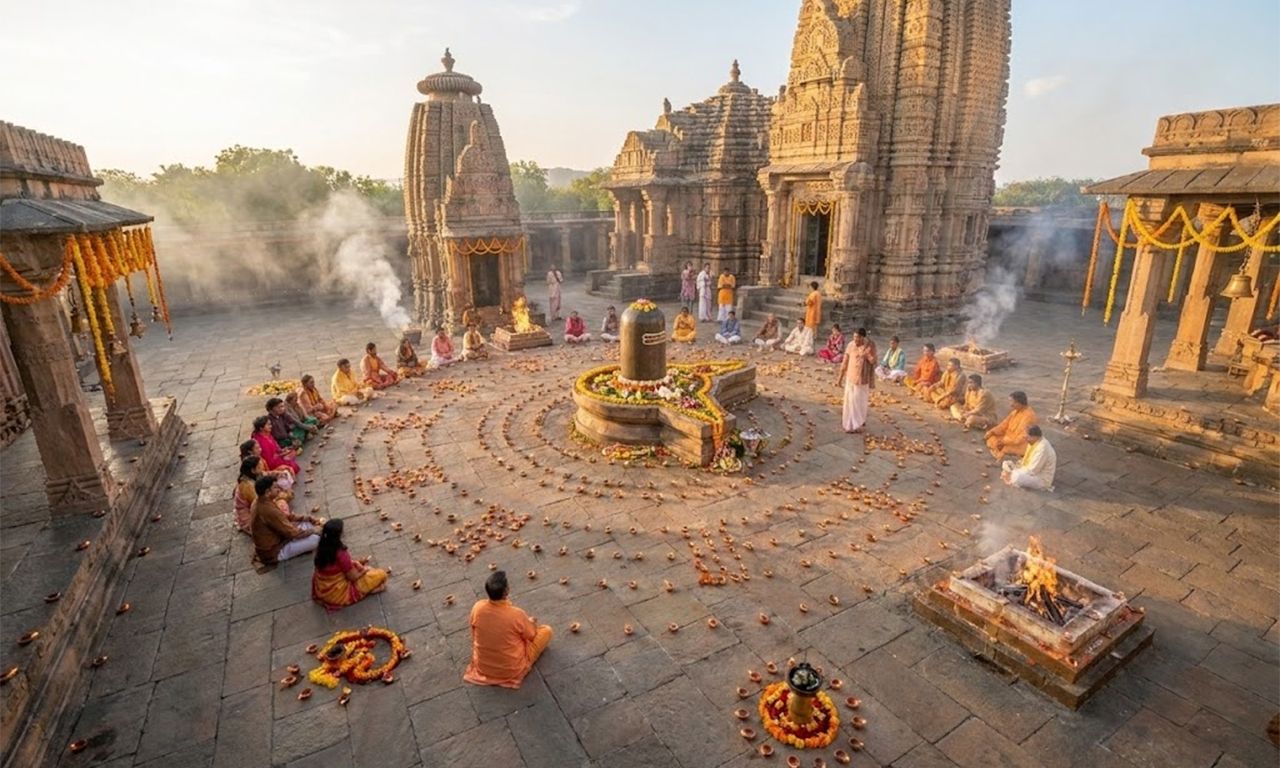
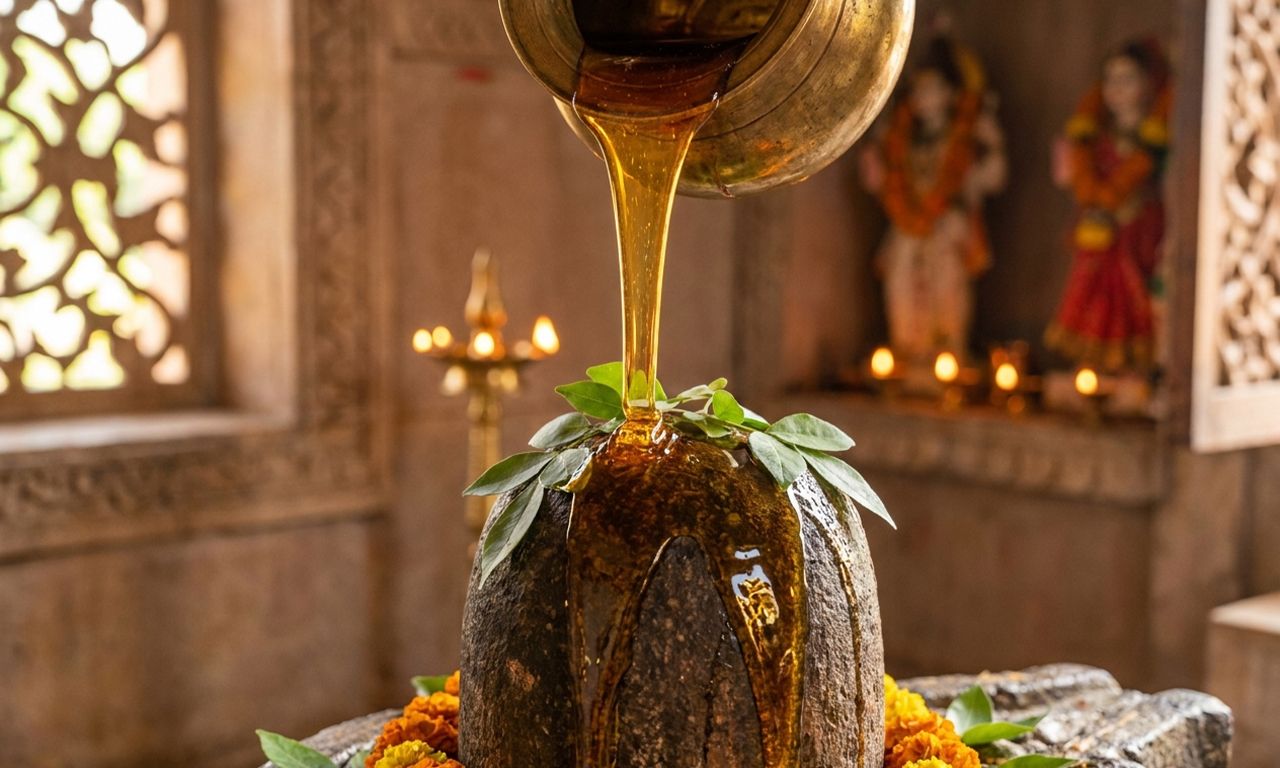
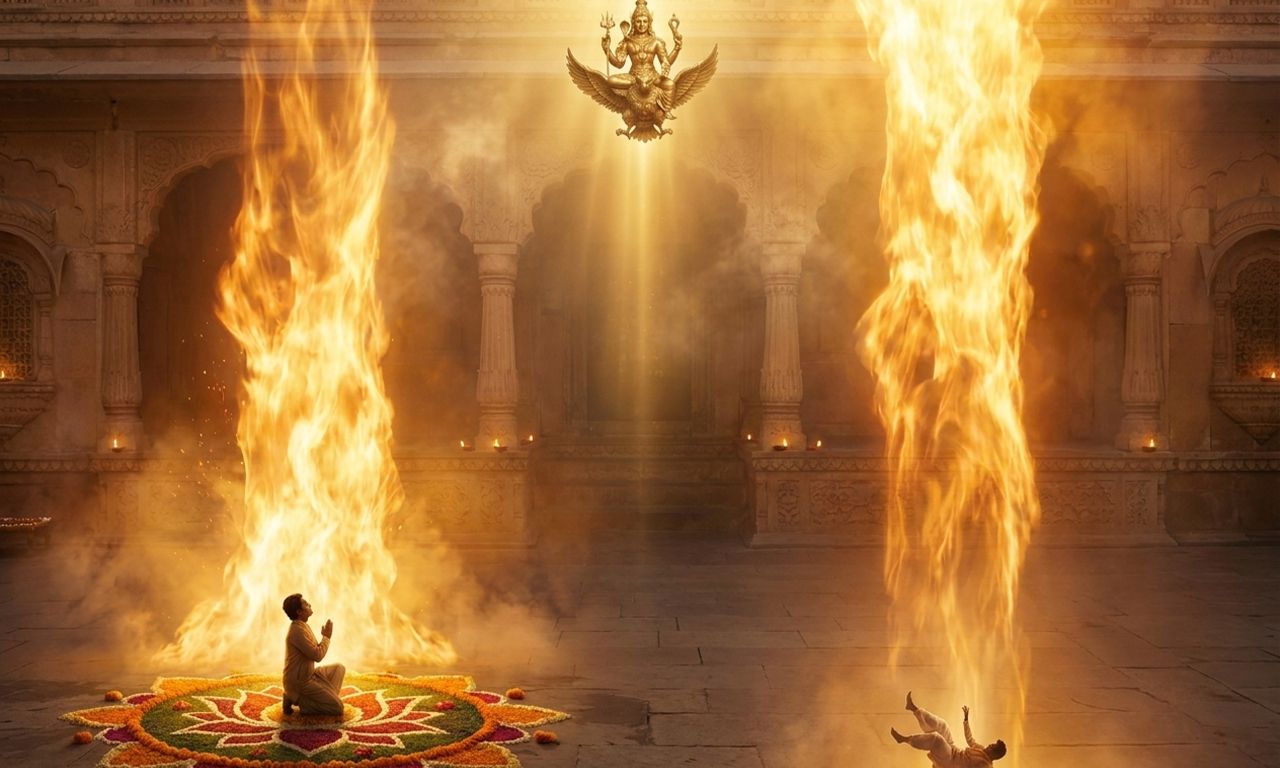
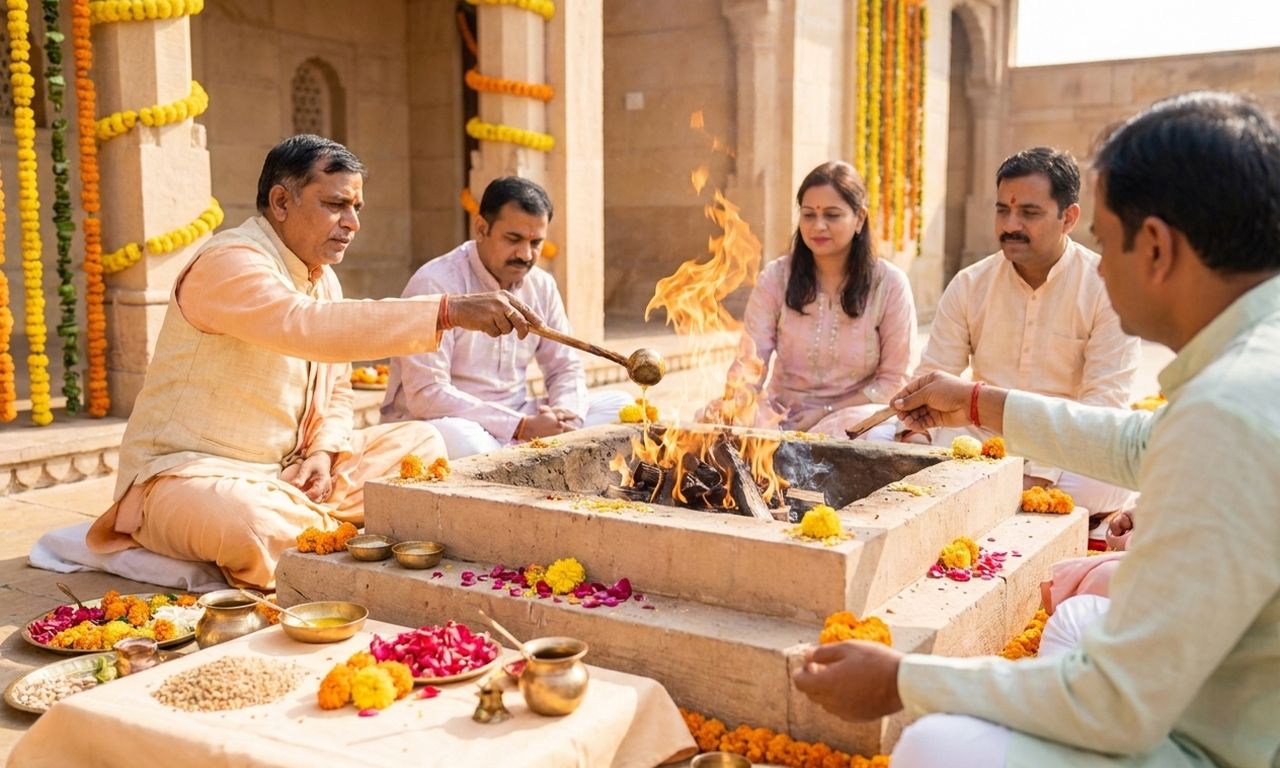
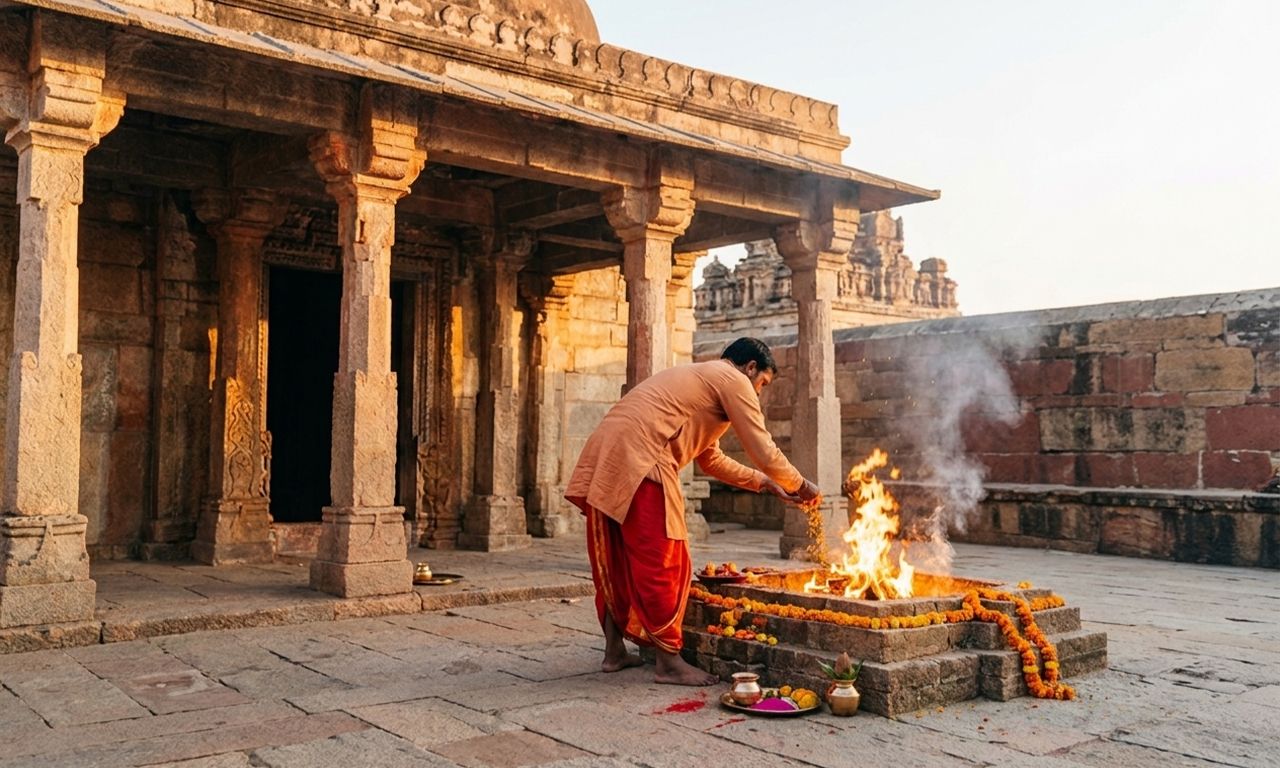
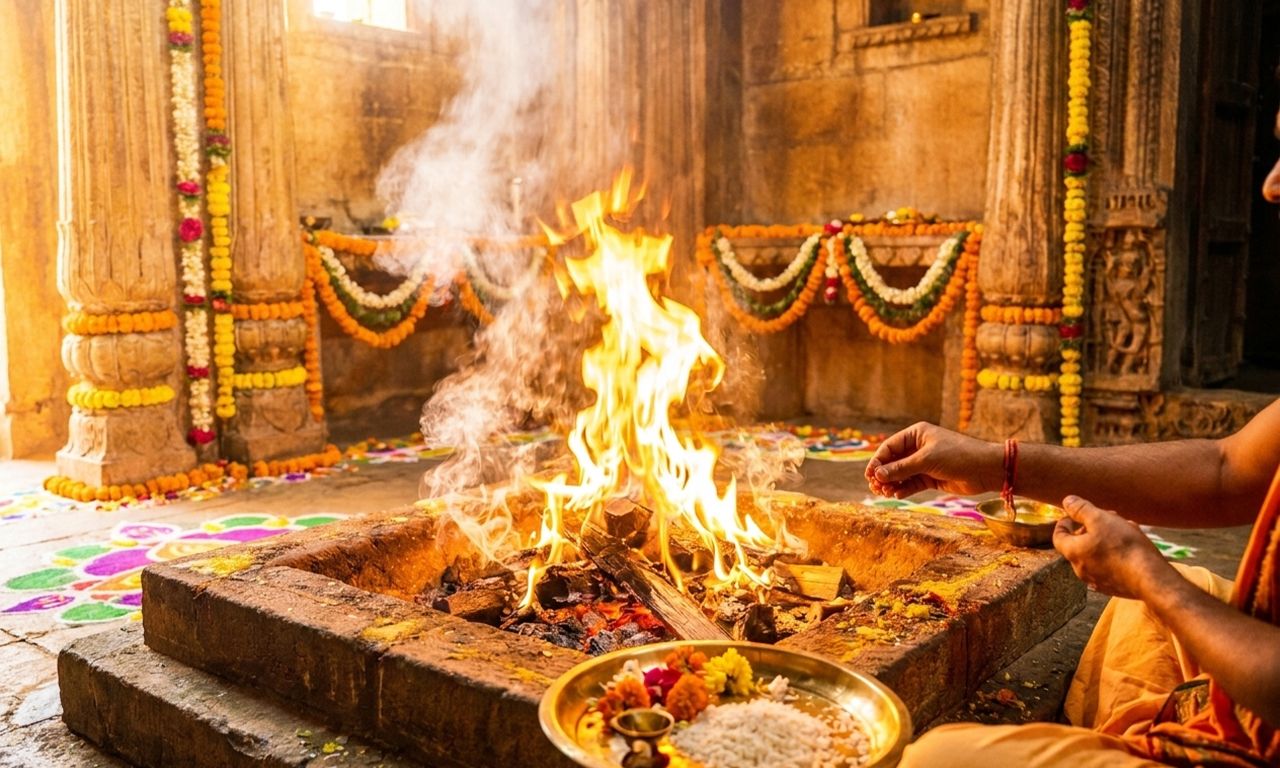
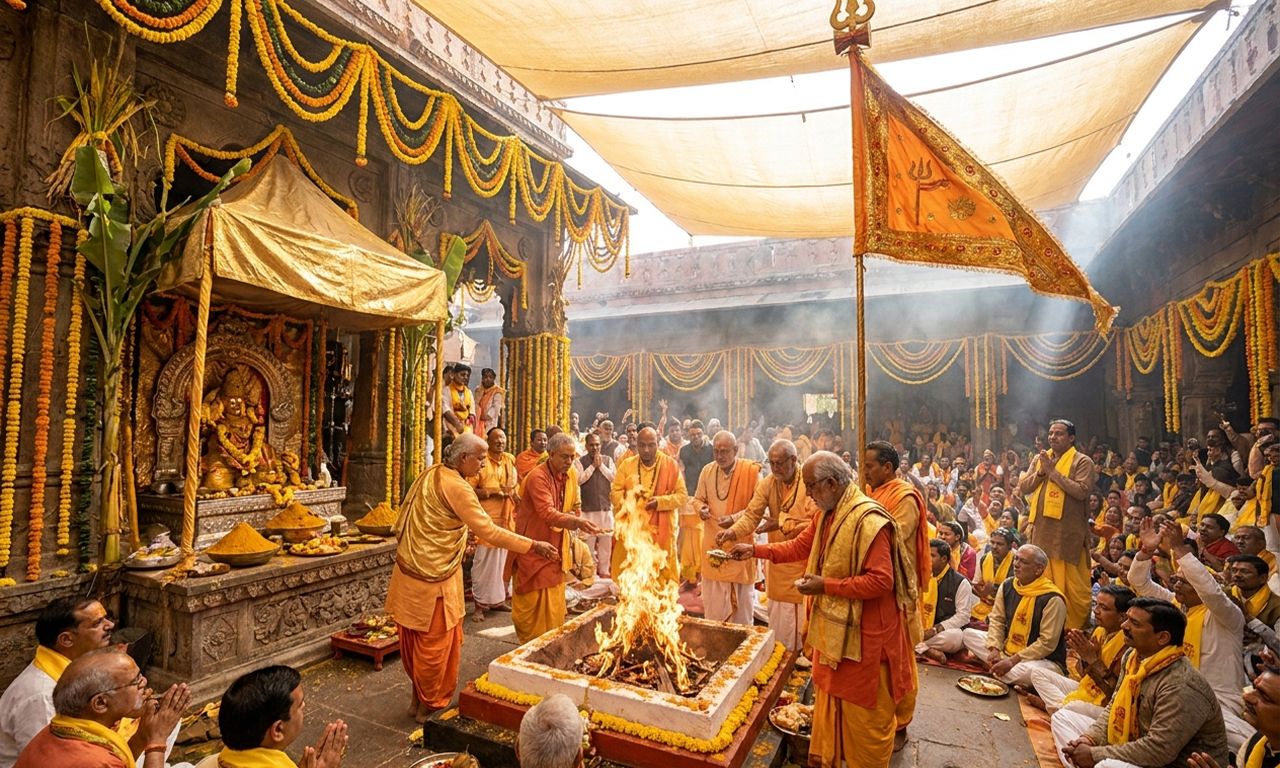
Three fires lit. Yellow mustard, til, ghee, the specific herbs poured into the flames. The baglamukhi havan moves through hours, in the rhythm the tradition designed. (See Article 4.)
Stories Told During the Ceremony
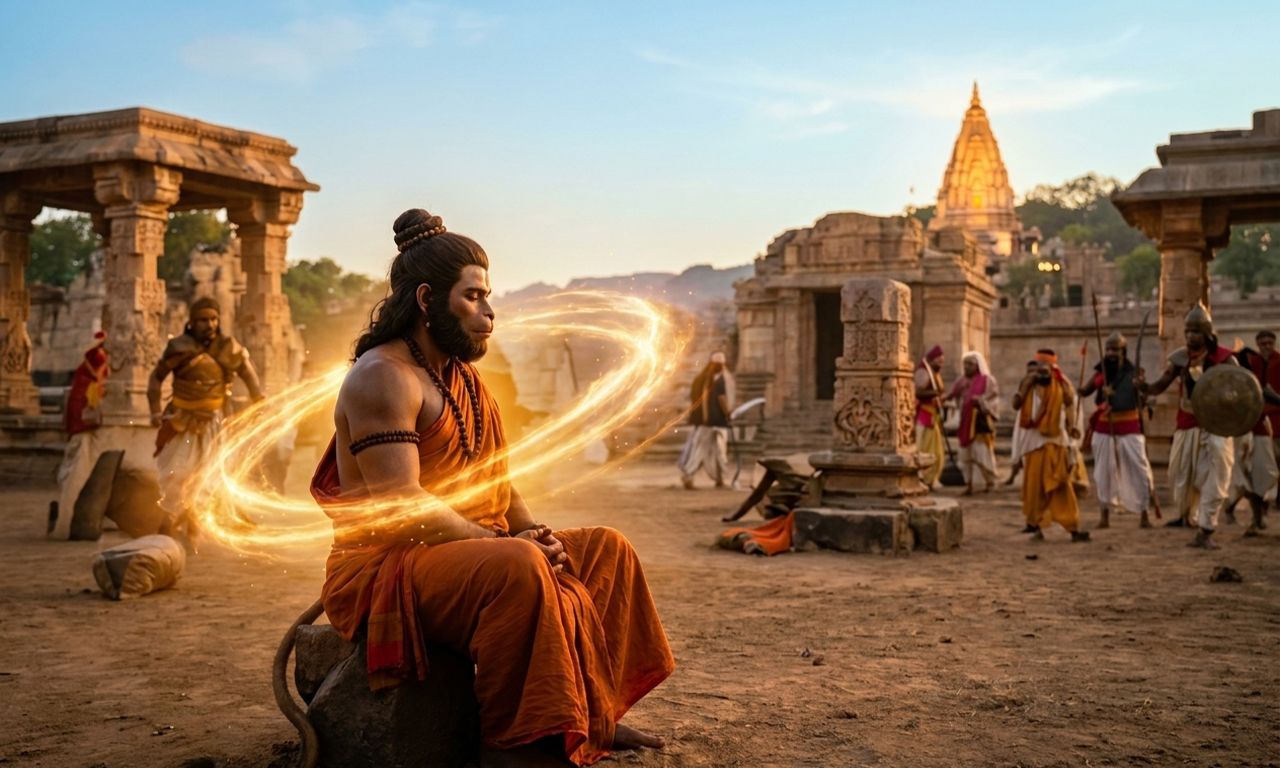
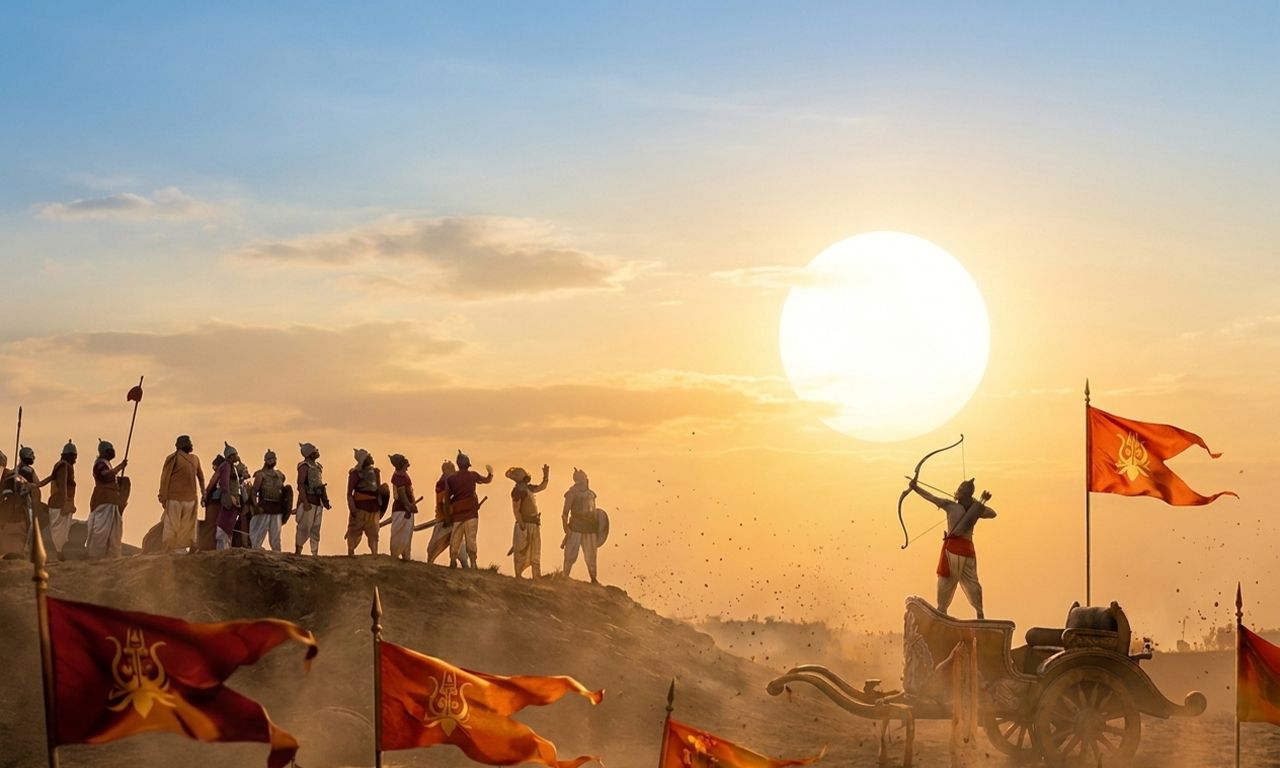
Between sections of the puja, the Kathavachak speaks the stories that the tradition holds. Hanuman and the sun. Angad in Ravana's court (Article 11). Karna's failed Brahmastra (Article 12). Shankaracharya holding the river in a clay pot (Article 36). Each story is theological data - not entertainment.
Aarti, Pushpanjali, Visarjan
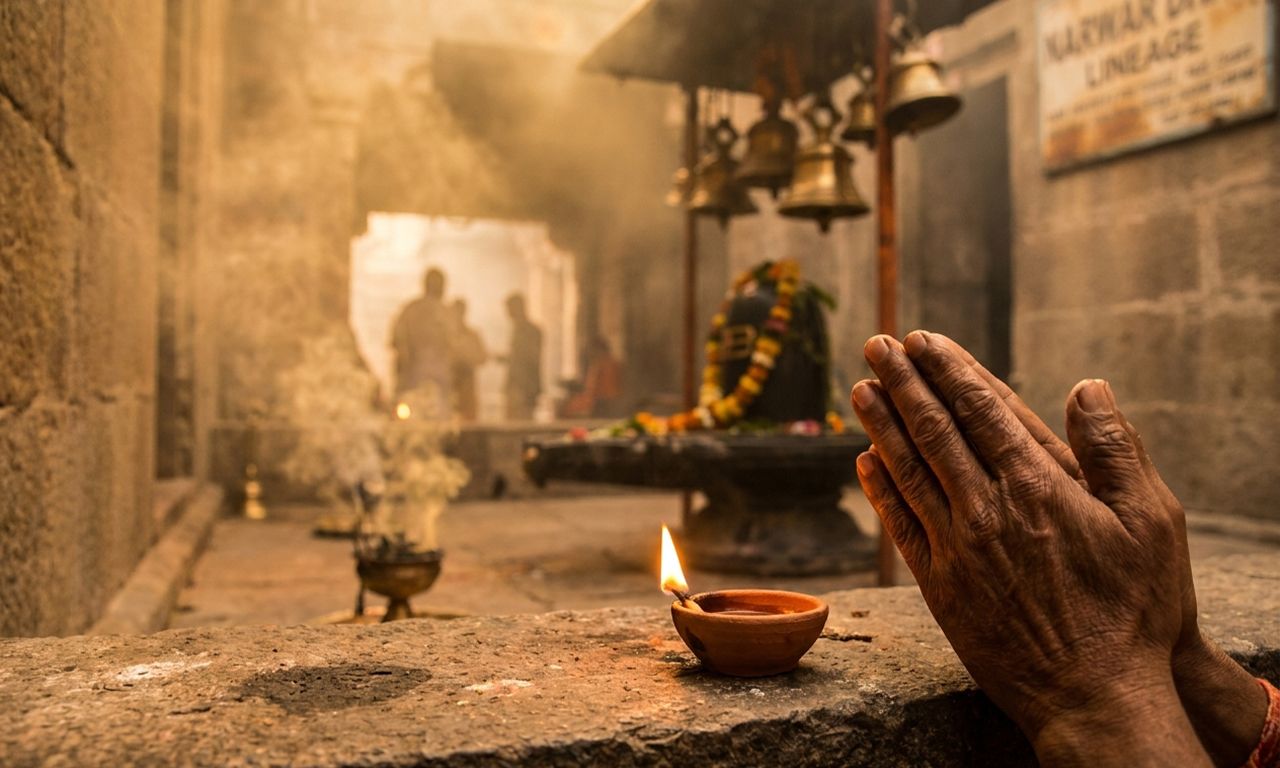
The lit lamp circulated before Maa Baglamukhi. Yellow flowers offered with both hands. The visarjan - the formal release of the goddess from the yantra back into her cosmic form.
Kshama Prarthana - The Closing
The forgiveness prayer that ends every SiddhiStar ceremony. (See Article 6.)
Why This Mahapuja Matters
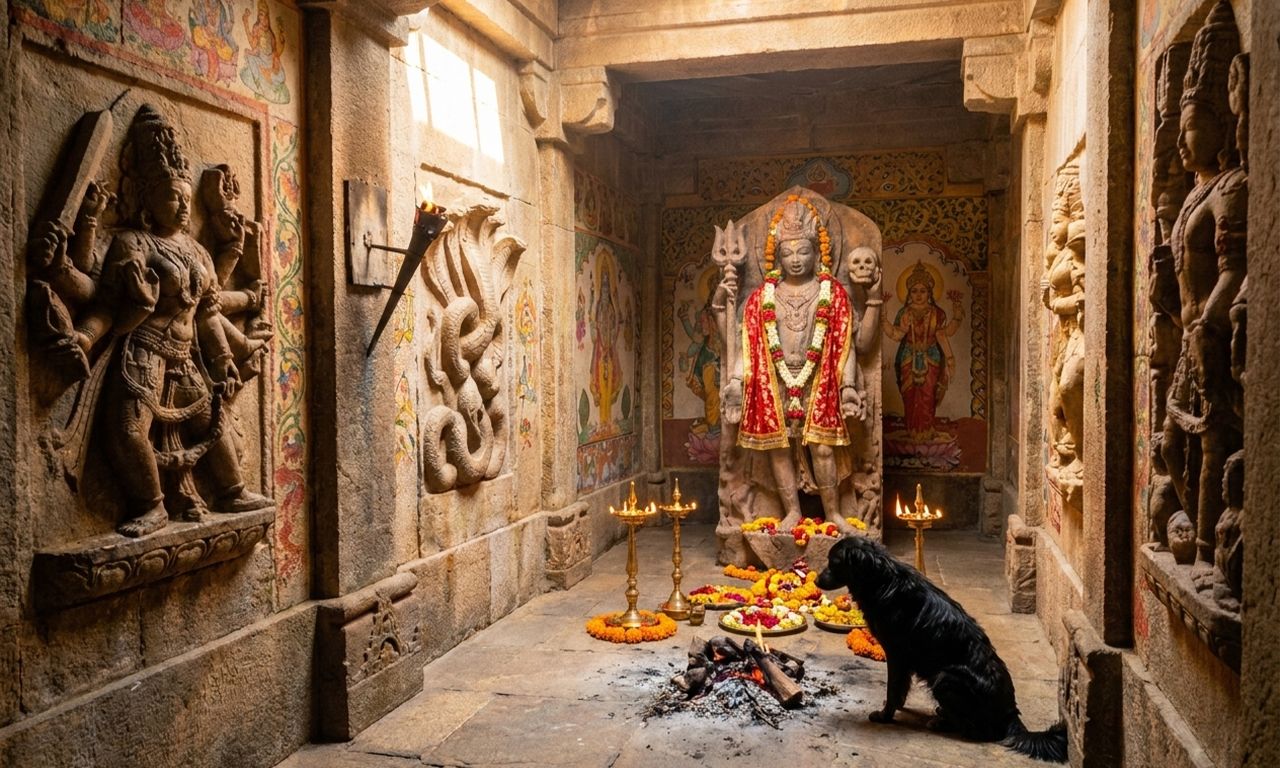
A short baglamukhi puja fulfills a form. The full Baglamukhi Jayanti Mahapuja at the baglamukhi temple at Narwar Dham fulfills an intention. The mantras require the time they require. The havan requires the fire it requires. The Sankalp requires real attention to each family registered.
Every reader who wants the depth of the tradition brought into their Baglamukhi Jayanti can be part of this. Mass Online Puja from Rs. 101. Individual Online Puja conducted for your family alone.
Book a Baglamukhi puja with complete Sankalp with SiddhiStar Online Puja service from Narwar Dham