Who Was Swami Karpatri Ji Maharaj? The Extraordinary Scholar-Saint Whose Journey Was Shaped at Narwar Dham
By SiddhiStar | Narwar Dham Parampara
8 August 2026 • 6 min read
The Scholar Who Lived What He Taught
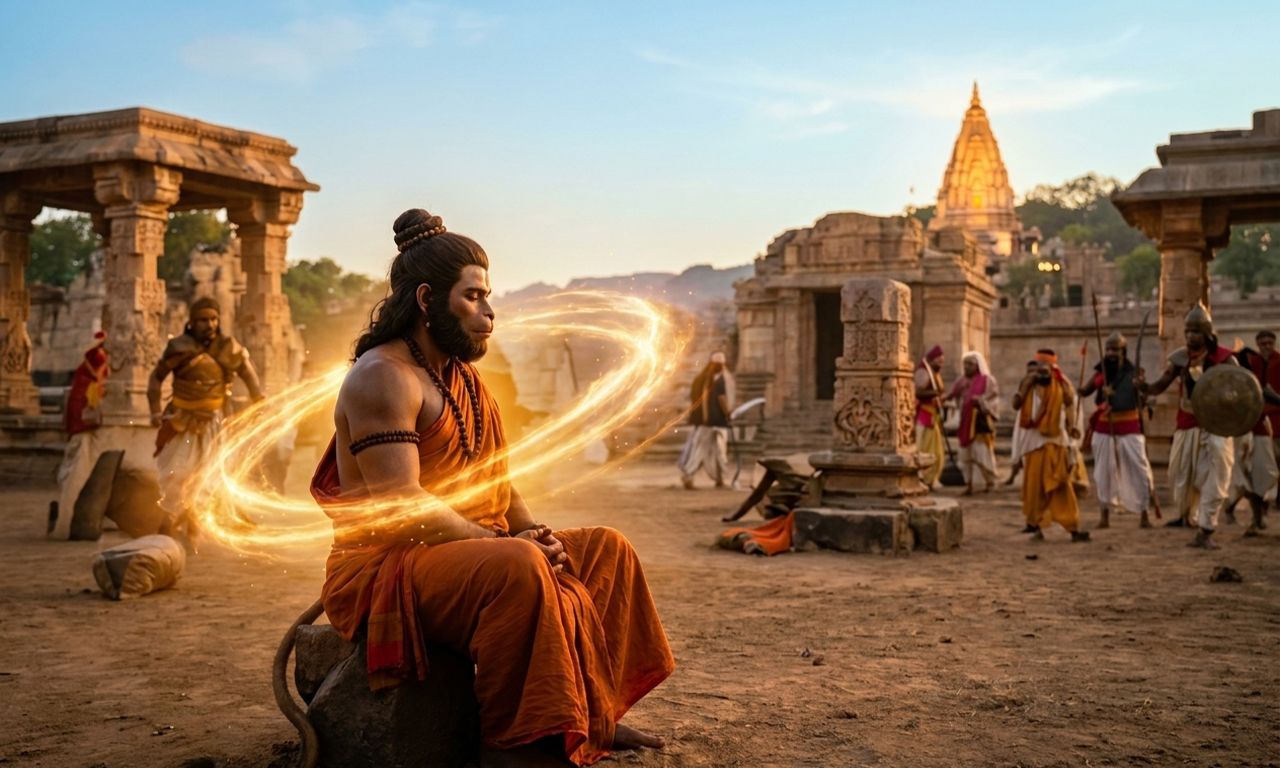
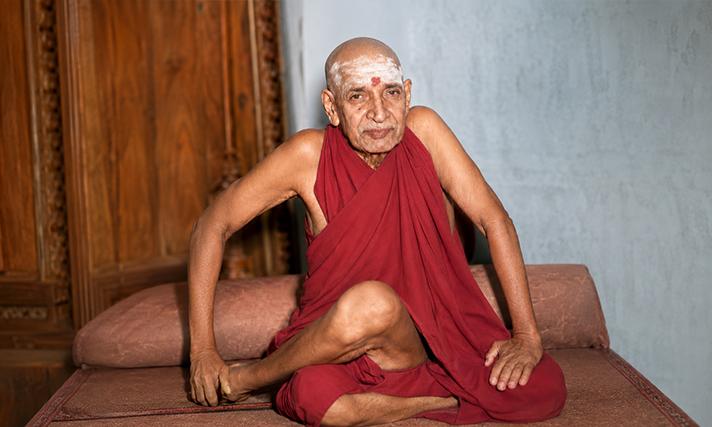
There is a particular kind of scholar who does not merely interpret scripture but seems to carry it in his bearing. In the devotional history of twentieth-century India, Swami Karpatri Ji Maharaj belonged to that rare order. He was addressed as Dharmasamrat, and the title was not decorative. His command over the Vedas, Vedanta, Mimamsa, Nyaya, the darshanas, the Puranas and the Ramcharitmanas was of a sort that made his debates events in themselves, followed as closely by ordinary listeners as by pandits.
What set him apart was less the range of his learning than what he chose to do with it.
Offers of position, honour and religious authority came to him through his life. He accepted none of them. His purpose stayed fixed on one thing, the protection of Sanatan Dharma and the preservation of the shastric tradition. His discourses carried argument and citation rather than sentiment, and it was this rigour that earned him the regard of scholars and sannyasis across the country.
From Harinarayan Ojha to Karpatri
He was born in 1907, and the name recorded at his birth was Harinarayan Ojha. When he took sannyasa, his guru gave him the name Swami Hariharananda Saraswati. Yet the name the world came to use for him was neither of these.
The story behind it is often told. He would not take his food in a vessel. Whatever grain his cupped palms could hold was all he would accept at a meal. From that habit came the name by which he is remembered, kar, the hand, and patra, the vessel. Karpatri, the one whose palm is his bowl. It was read then, and is read now, less as austerity for its own sake than as a quiet daily statement about renunciation, self-restraint and the refusal of excess.
Narwar Dham: Where the Foundation Was Laid
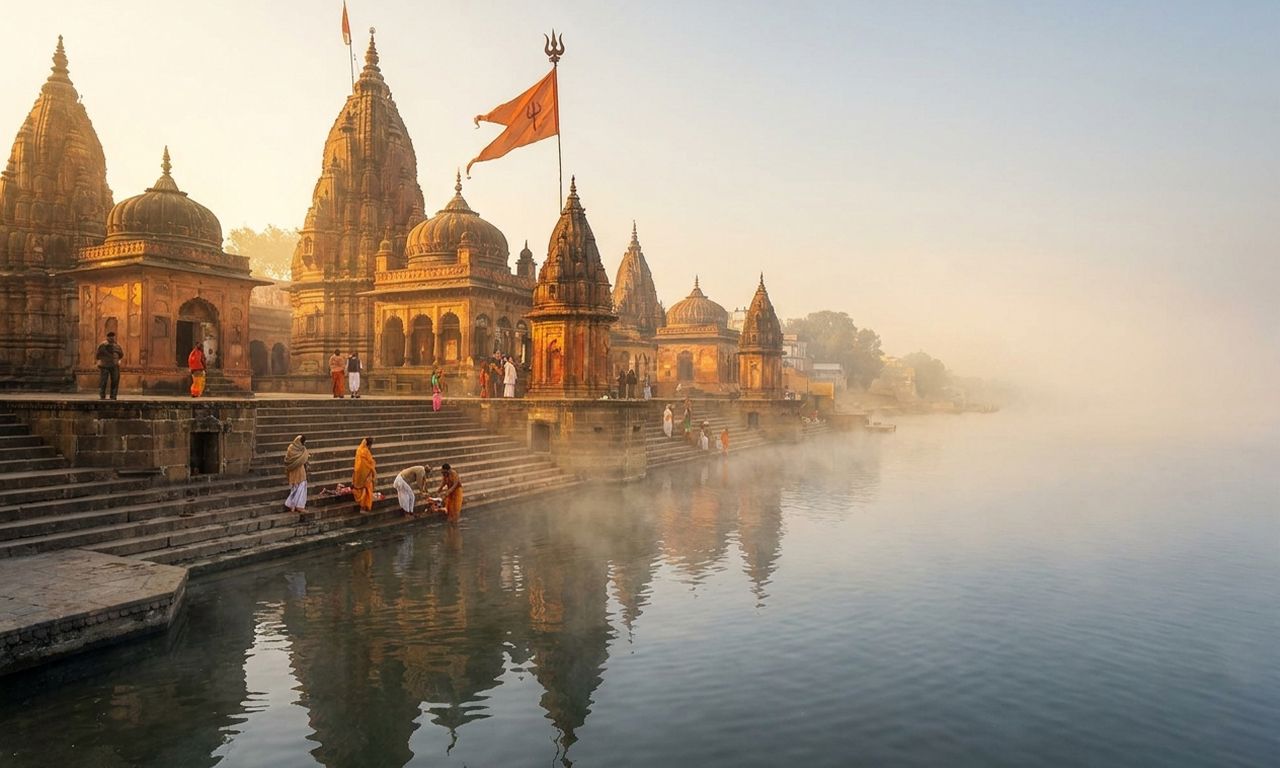
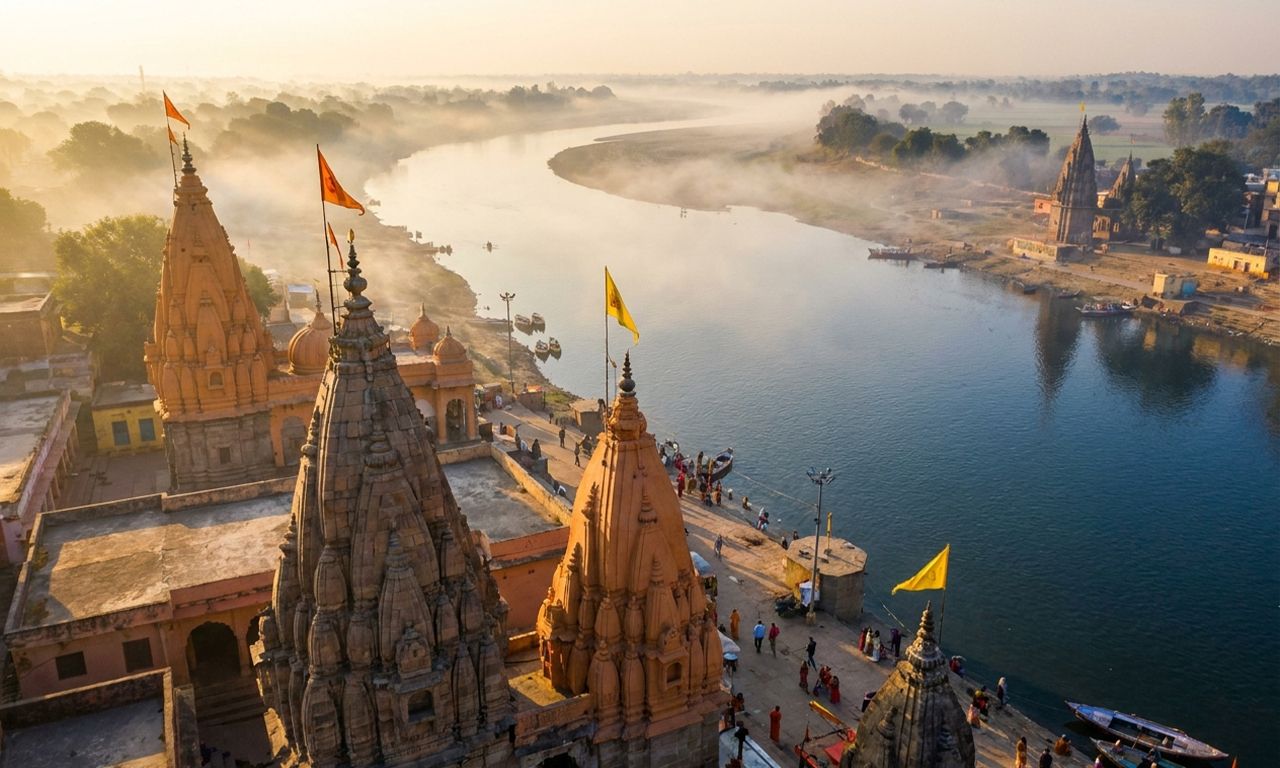
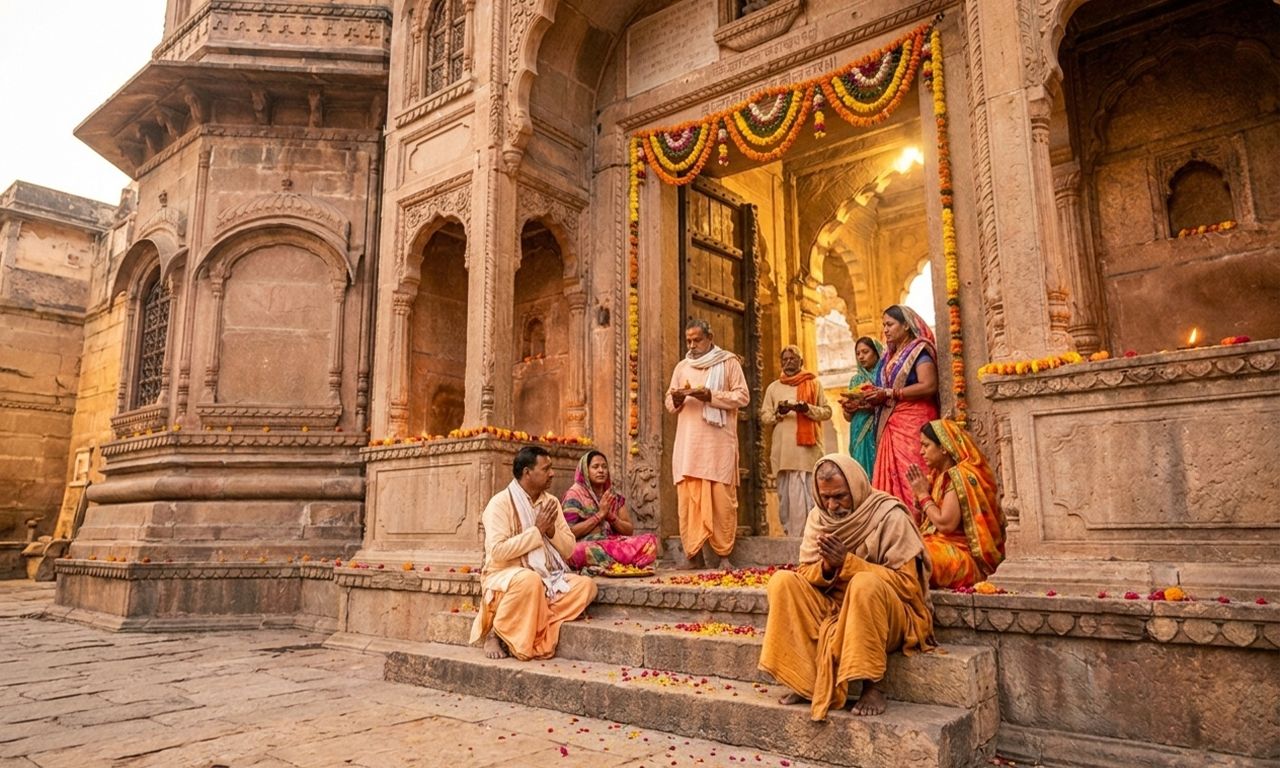
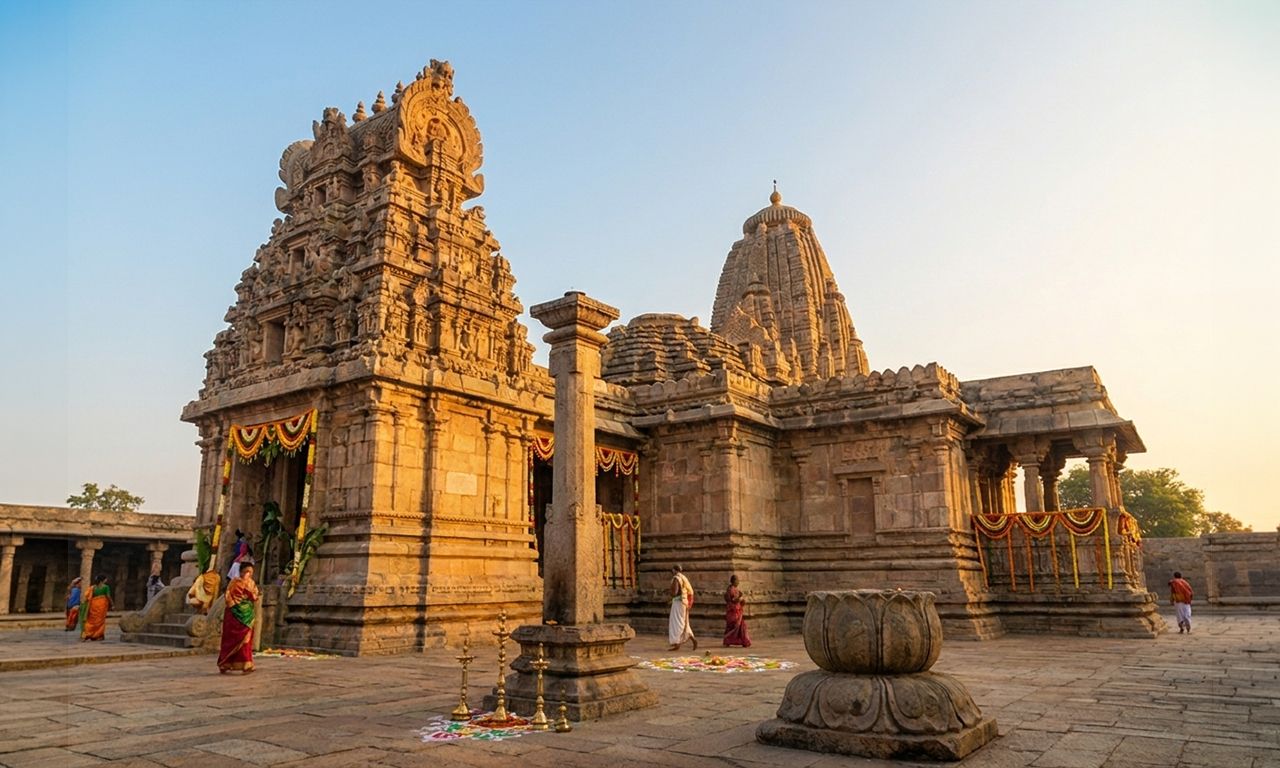
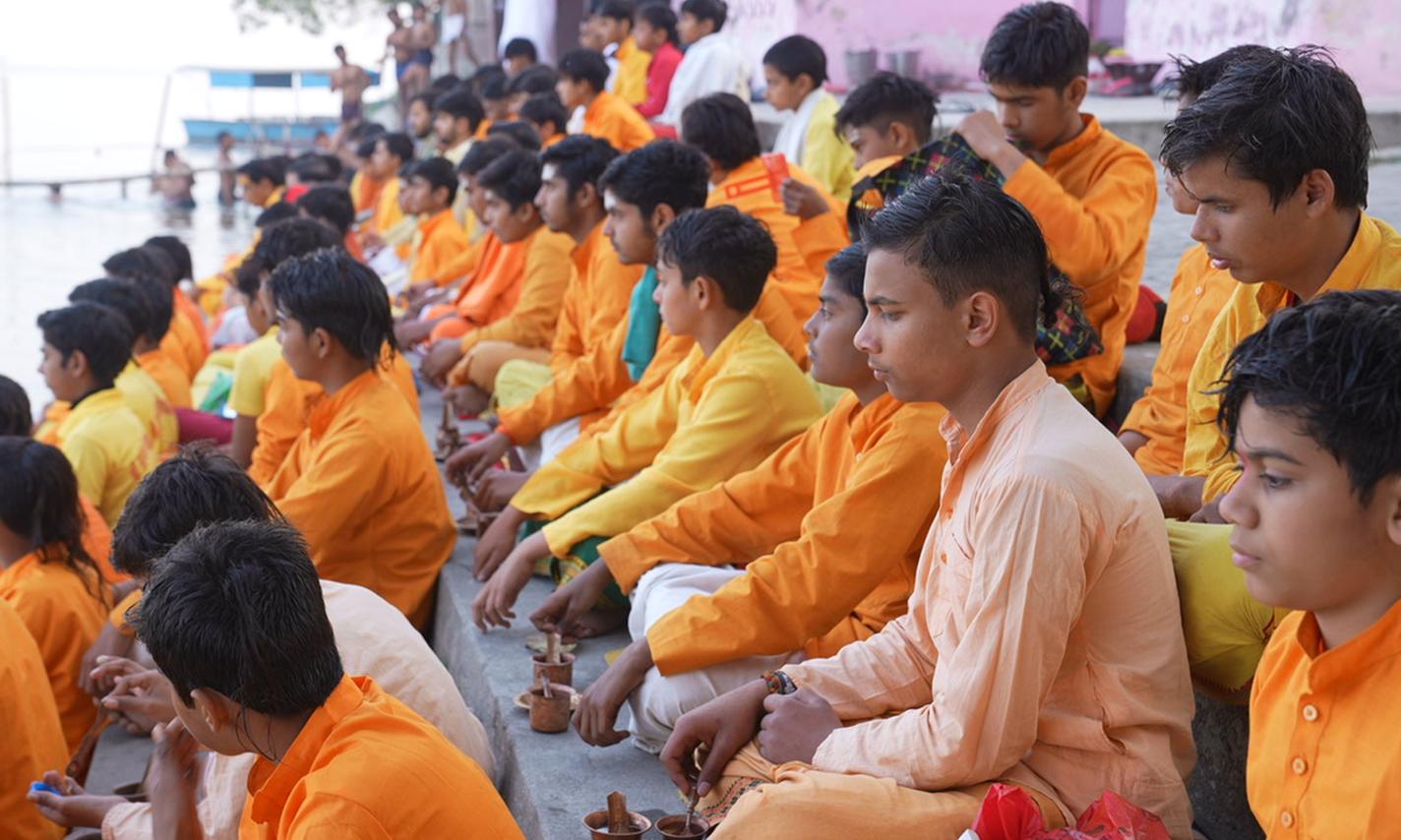
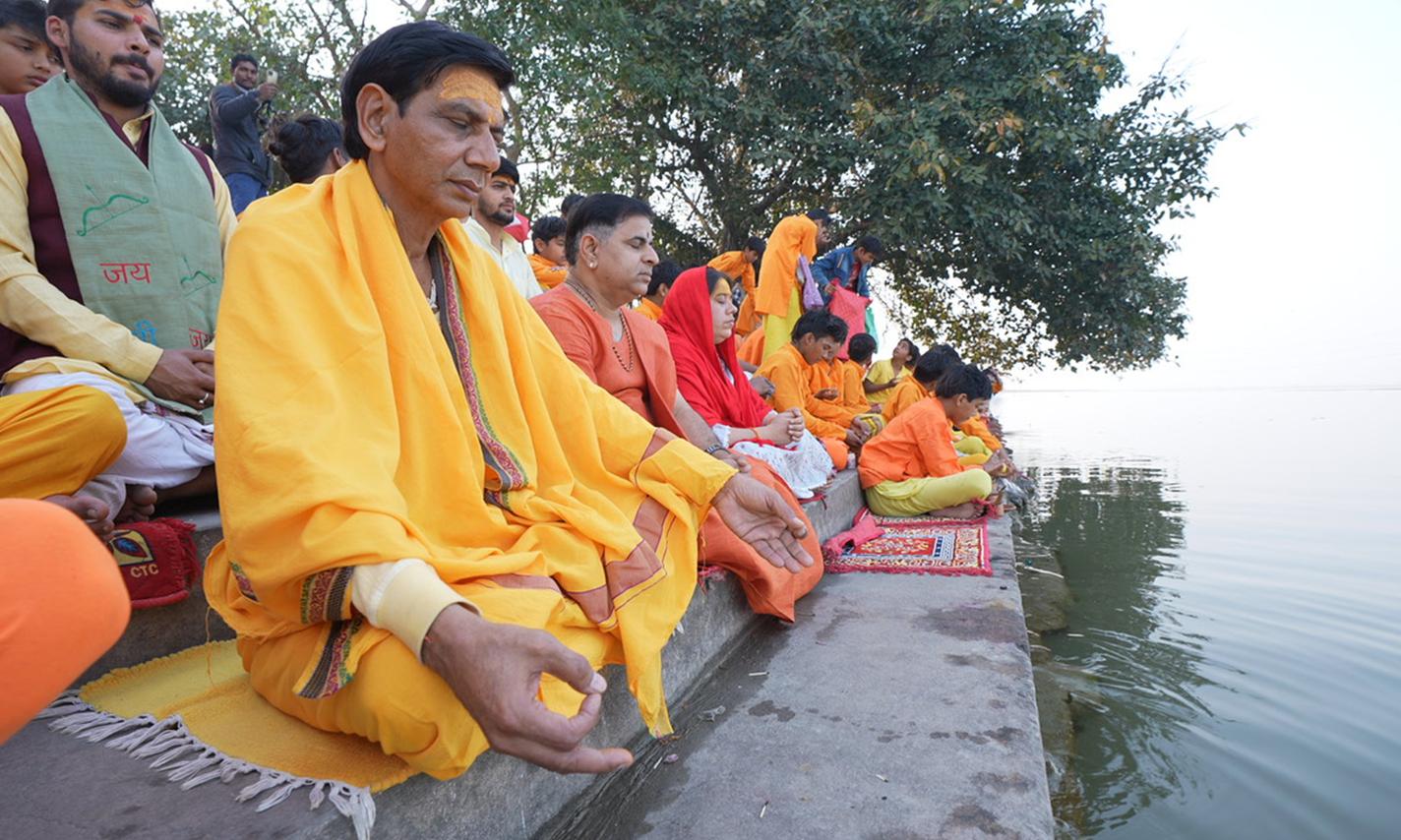
Every scholar of that stature has a place where the foundation was laid, and for Karpatri Ji that place was Narwar Dham. It was here, at the Sri Sangved Sanskrit Mahavidyalaya on the bank of the Ganga, that his study of Sanskrit, shastra and the Vedic tradition took its early shape. The mahavidyalaya has carried an unbroken line of shastric teaching since 1903, well over a hundred and twenty years, and it stands today in the same continuity.
His teacher here is remembered as Anant Shri Vibhushit Shri Vishveshvar Ashram Ji Maharaj. Under that guidance the shastric vision formed in him that would later place him among the foremost scholars of the Vedic tradition in India.
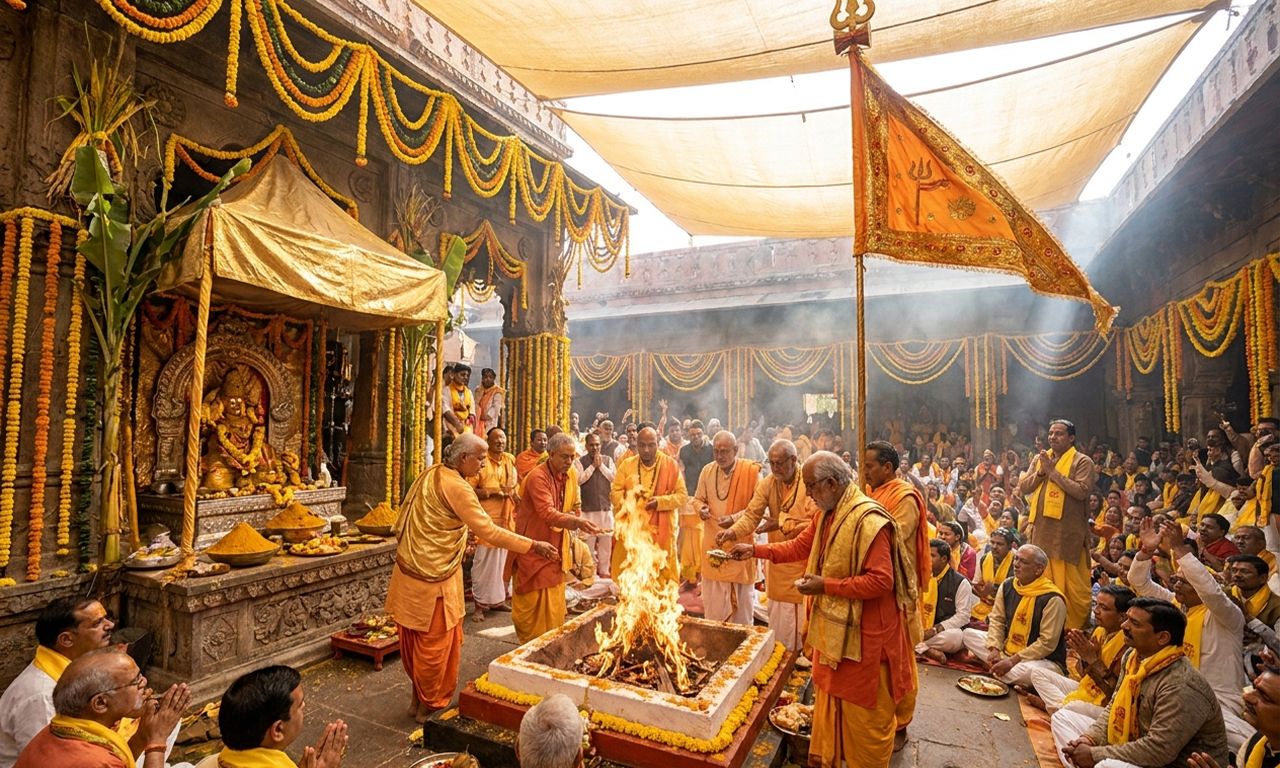
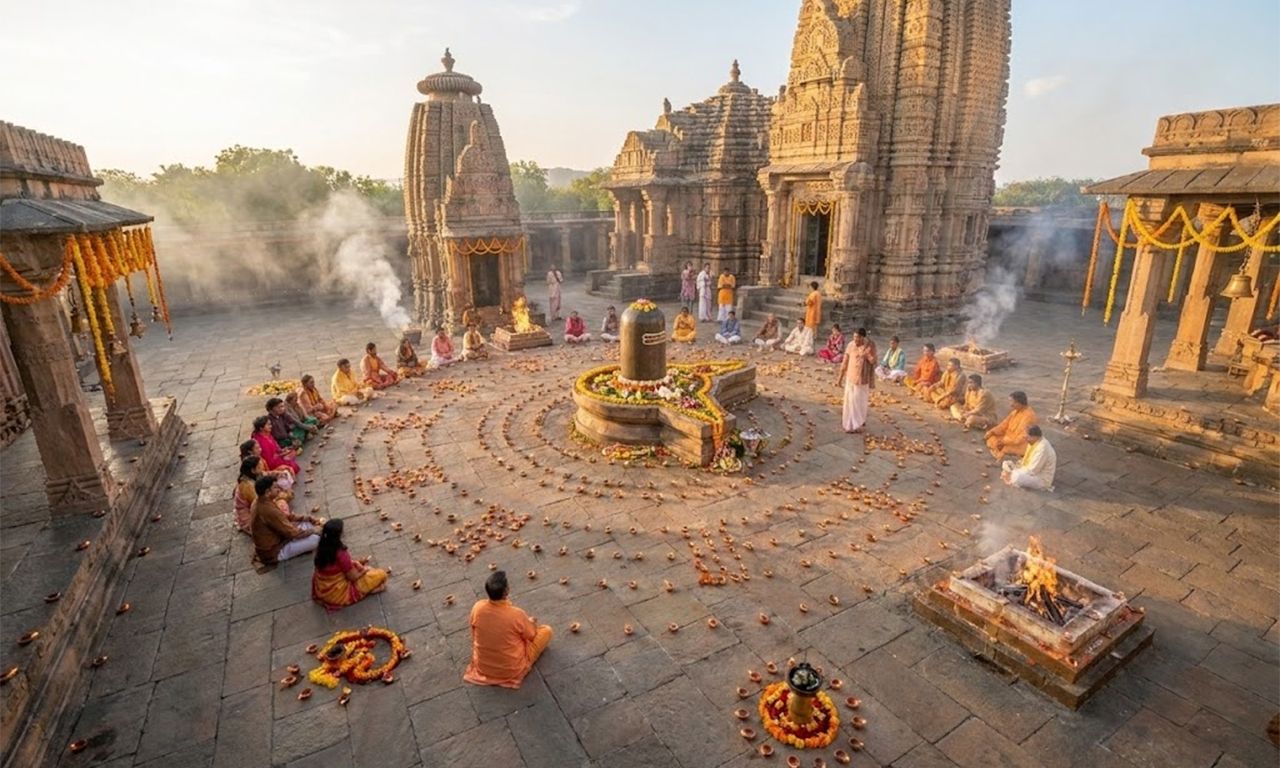
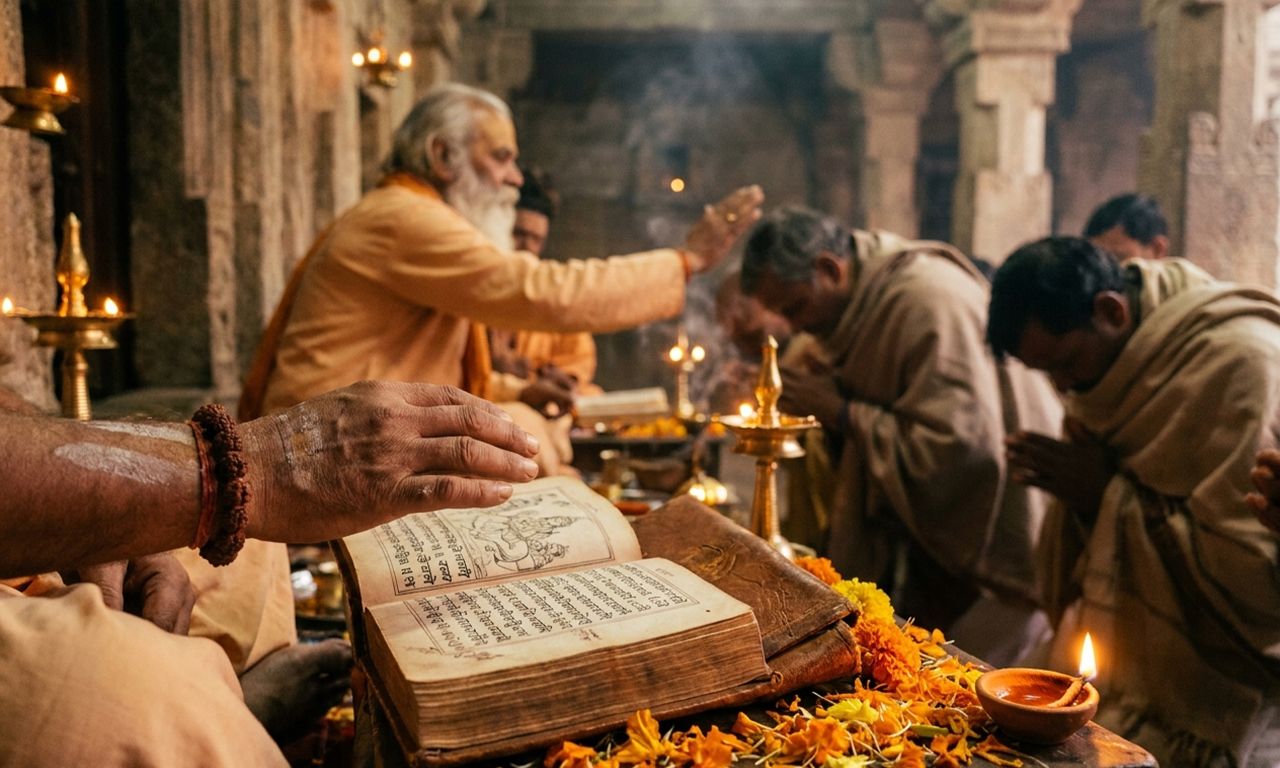
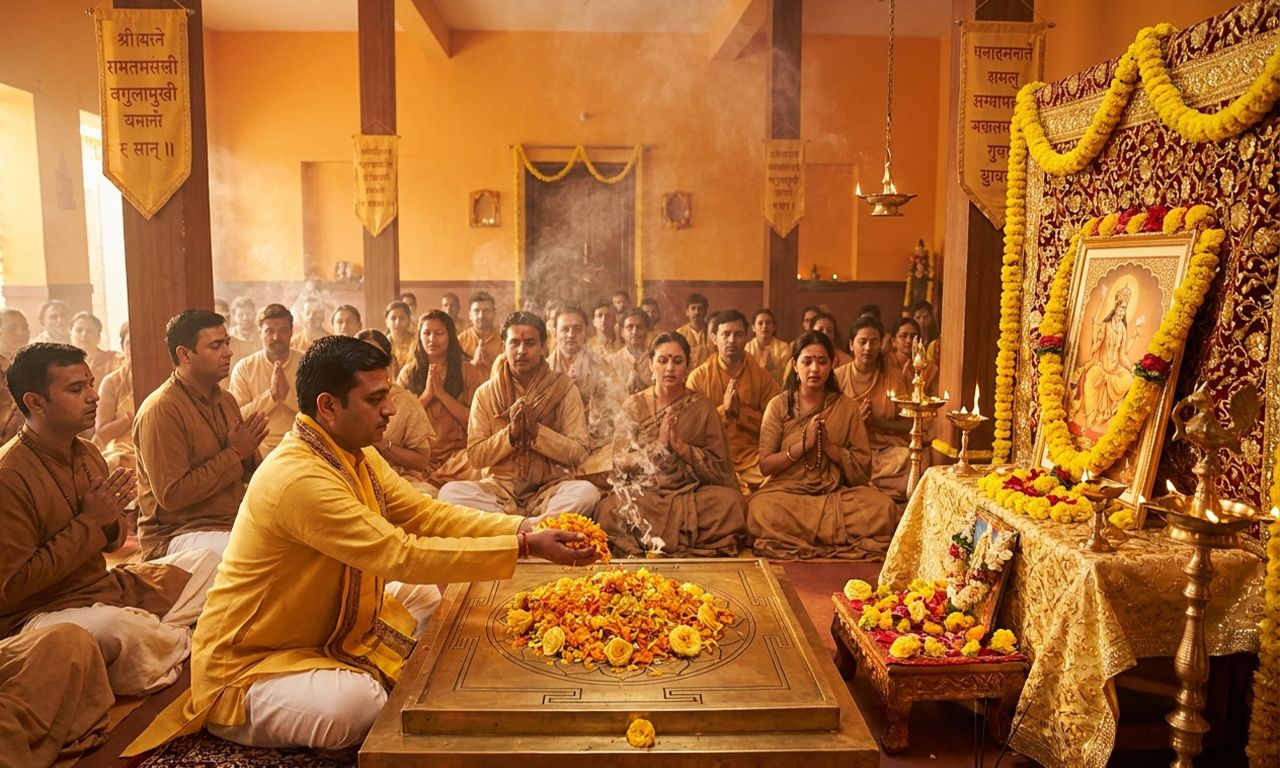
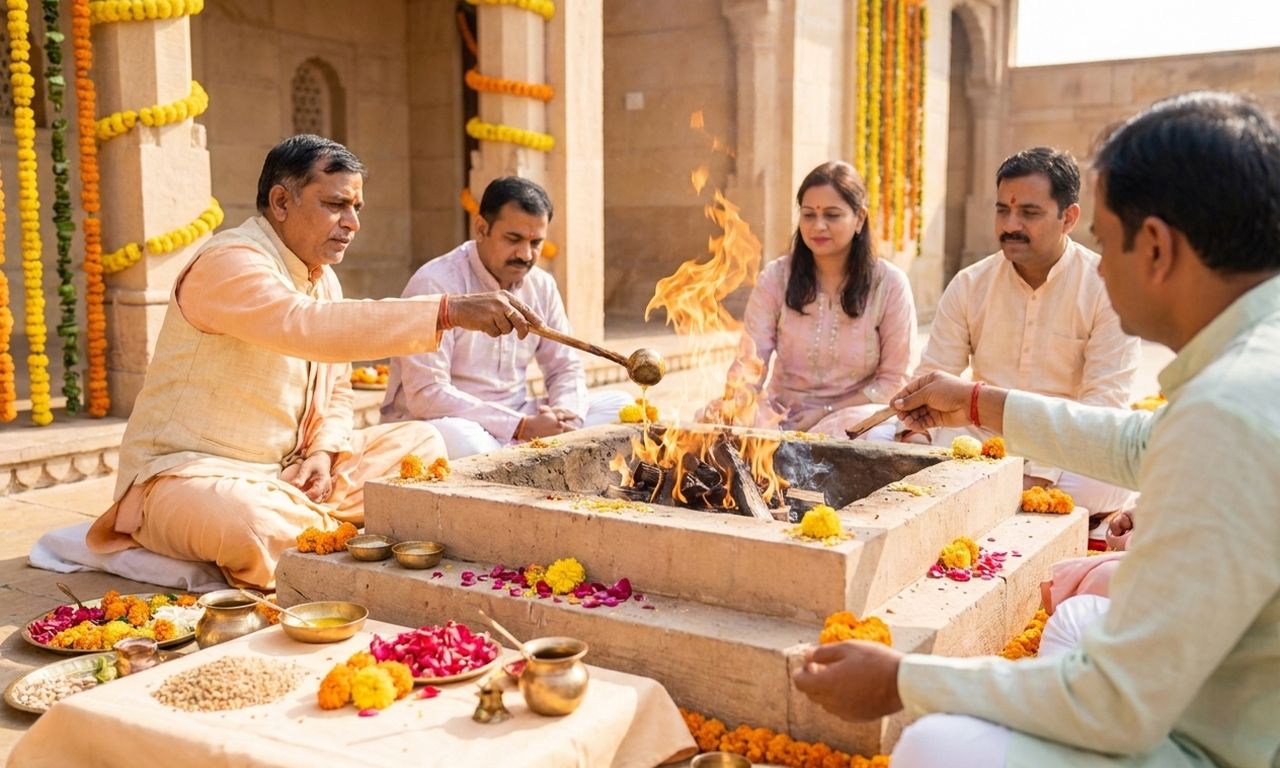
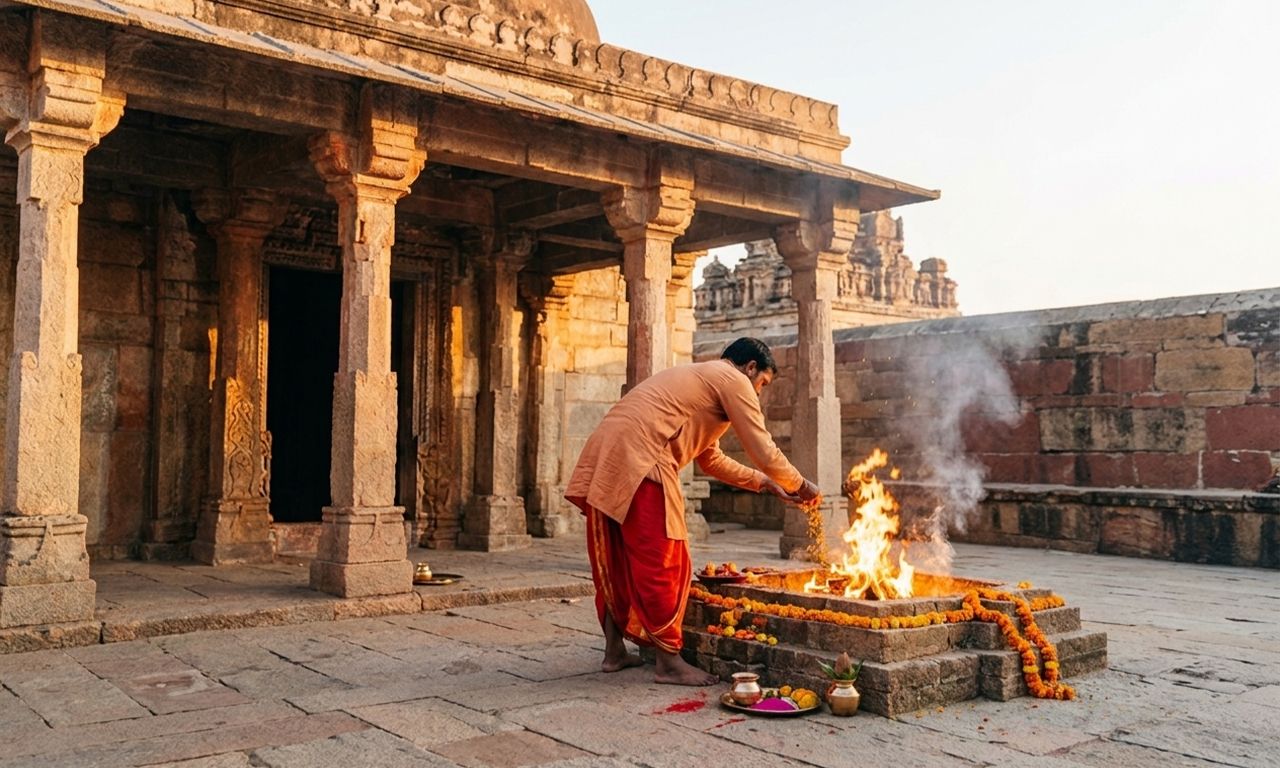
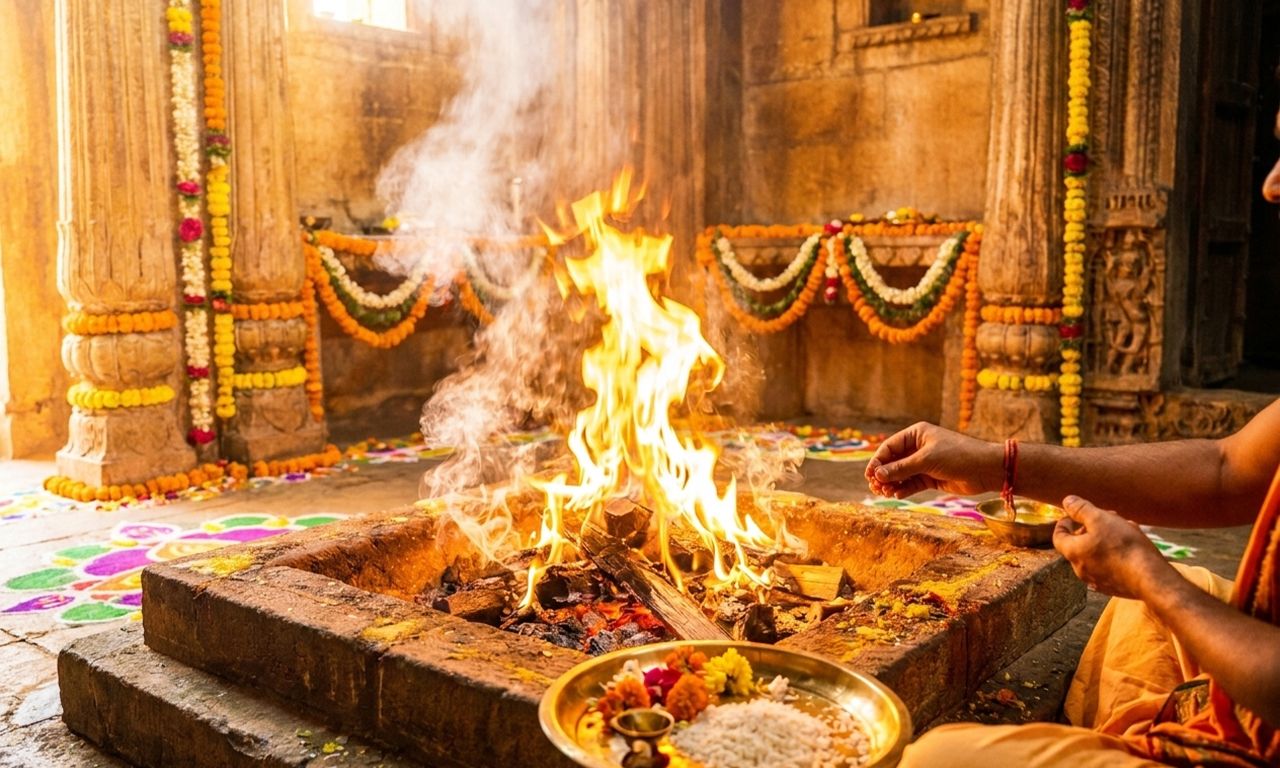
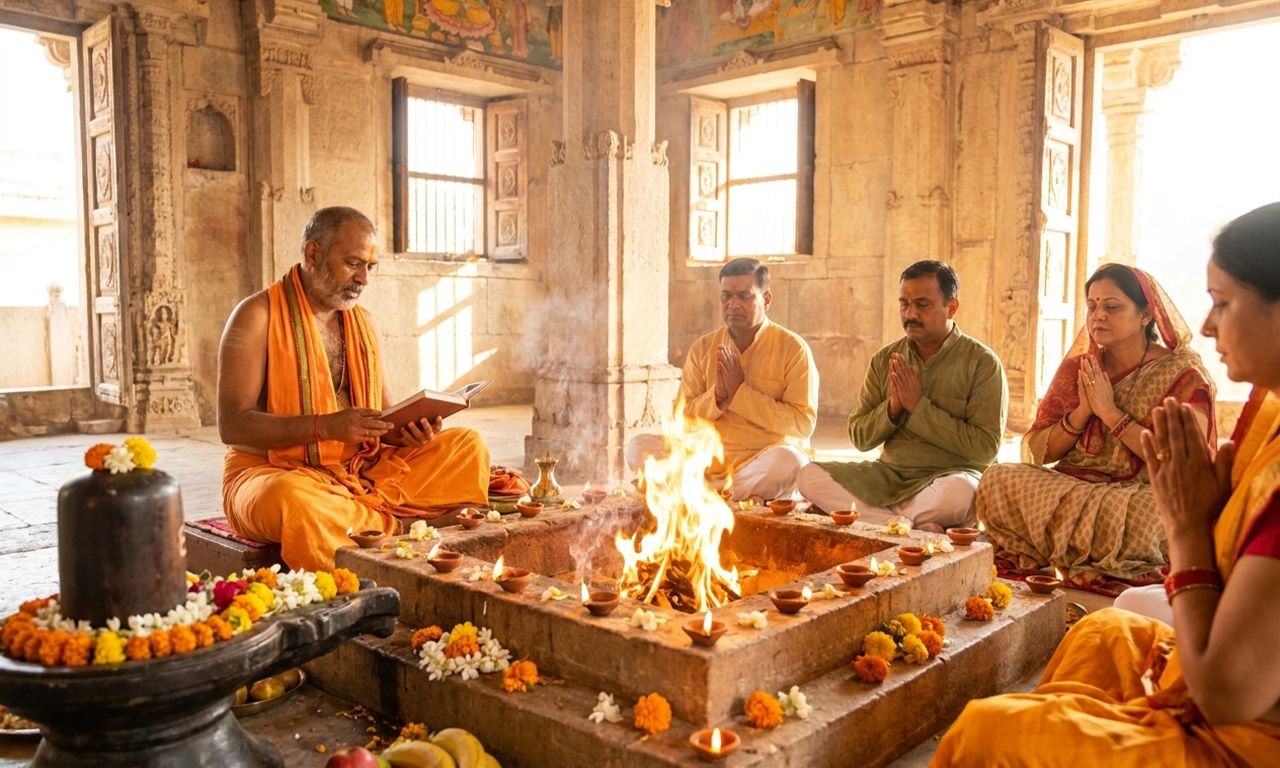
Narwar Dham in those years was not only a place of study. Its yajnashala was a recognised centre of shastrarth, Vedic ritual and religious discourse. Tradition at Narwar holds that a great Vedic mahayajna was completed here in his presence, attended by the Shankaracharyas of all four peeths. Whether one reads it as history or as remembered honour, the gathering is held to reflect the regard in which the whole Shankara tradition held him, and the weight of his shastric standing.
The Resolve to Restore Dharma
In 1940, on Vijayadashami, he founded the Dharma Sangh. Through it a large number of disciples took up the systematic study of shastra and carried the work of Sanatan Dharma into different parts of the country. He wrote extensively as well, leaving a body of texts that passed the Indian knowledge tradition on to a younger generation. Little in his life was set aside for himself. Its hours were given to dharma, to shastra and to the society he believed both were meant to serve.
The Nation, and the Tradition, Acknowledge Him
Recognition of his place did not stay within religious circles. On 29 June 2022, the Government of India issued a commemorative postage stamp in his honour. A stamp is a small thing to hold and a large thing to receive. It marked not only a saint but the tradition of Sanatan knowledge he had represented so completely.
There is a second acknowledgement, more recent, and from within the tradition itself. In April 2026, Jagadguru Shankaracharya Swami Avimukteshwarananda Saraswati Ji of Jyotirmath named Narwar a pavan adhyayan sthali, a sacred place of study. Read together, the two point to the same fact from two directions, one civic and one sanatani, that the ground on which this scholar-saint was formed was Narwar Dham.
A Tradition Still Alive
At Narwar Dham the memory has not been allowed to fade. His memorial kutiya stands, the Sangved Mahavidyalaya continues, and the practice of shastric study goes on much as it did. These are not exhibits behind glass. They are the living witnesses of a lineage that gave modern India a saint of Karpatri Ji's stature.
His life leaves a plain lesson, and it is worth stating plainly. A saint of that order is not made by birth alone. Behind him lie years of sadhana, a guru-parampara, the patient study of shastra and the discipline of tapas. Narwar Dham is one such tapobhumi, a place from which a single seeker began a journey of knowledge that would carry the shastric standing of Sanatan Dharma to new heights across the country. On the bank of the Ganga, the same mahavidyalaya, the same tradition and the same inheritance still remind those who come after that the strength of India lies not only in its history but in its living guru-parampara.
Book a SiddhiStar Online Puja from Narwar Dham. On the banks of the Sindh.